
Painter, Ron Left spent many years (both studying and teaching) in Art and Design at AUT, Auckland. Earning his MA in 2005 and completing a PhD in 2016, he has since returned to full-time painting in his Auckland studio.
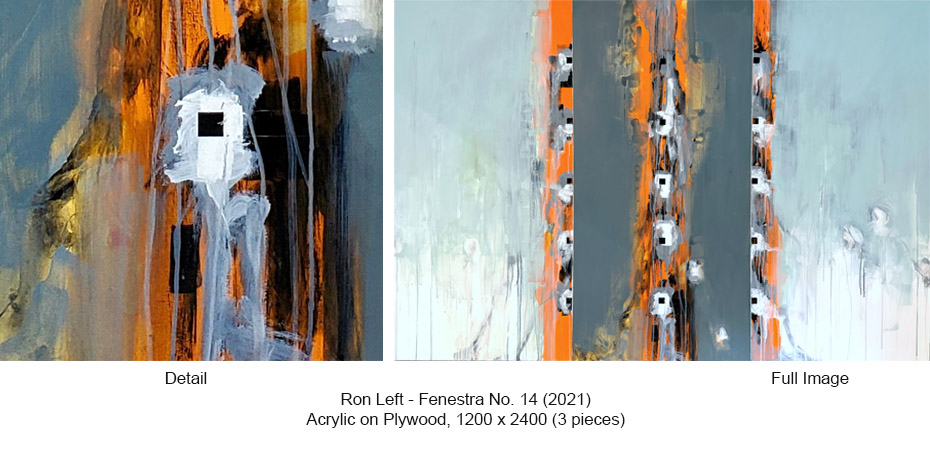
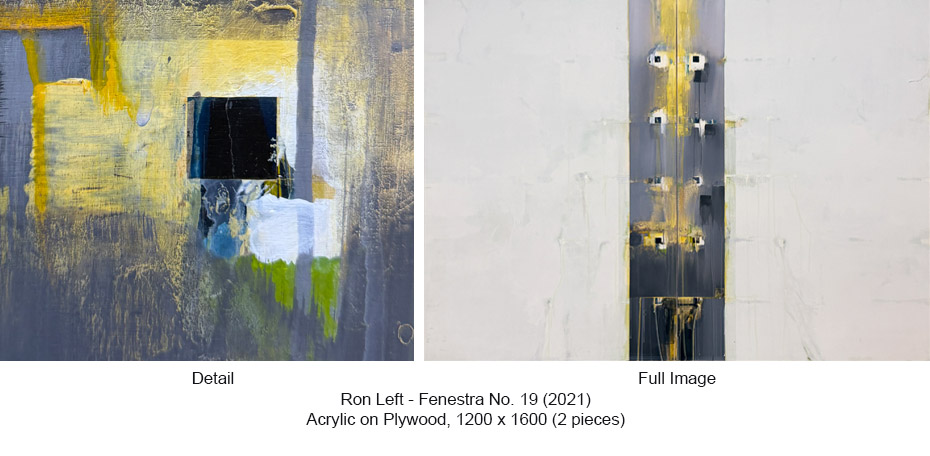
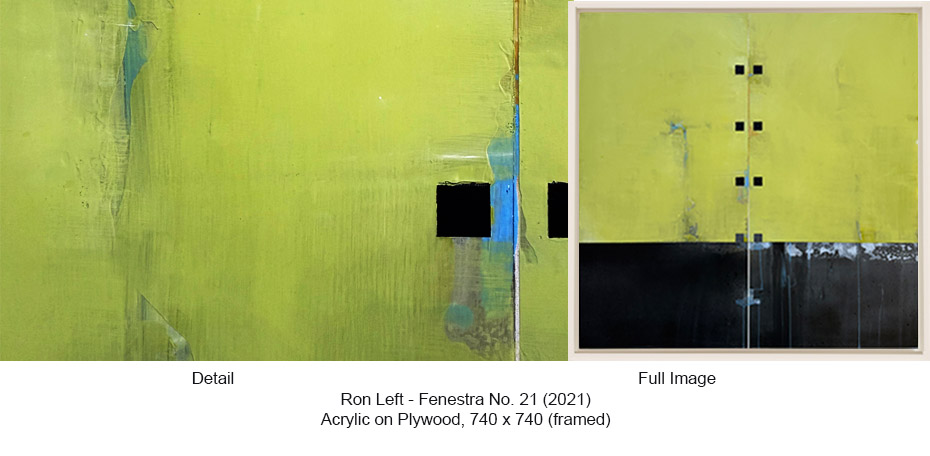
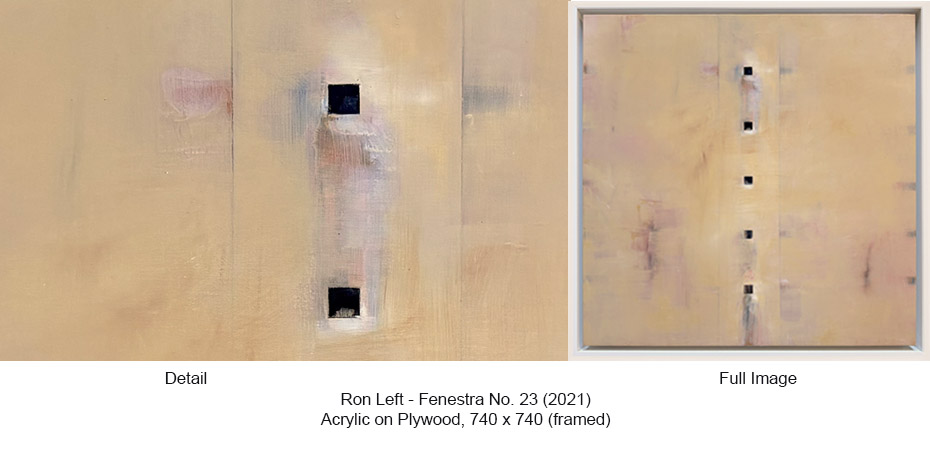
Fenestra (acrylic on plywood)
The Latin word fenestra refers to a window, but also more widely to an opening, a niche or portal. Penetrating the solidity of a wall, the window is a space of passing through, of shifting images, reflections and shadow. Like the retina it is a screen on which images coalesce.
Like any border or boundary, the fenestra is both a simple physical space, or juncture between spaces, and a set of complex processes of transformation. It reveals and disguises at the same time, it confuses the object and its surroundings. The window is a spaceless screen on which invisible forces play, mist and fog, obscure and reveal.
Scientifically, a glass pane is somewhere between a solid and an imperceptibly slow moving liquid. The paintings in the series do not represent actual windows and the Fenestra title serves not as a description but as an entry into the works through analogy. The paintings are more concerned with liquid moving states than tangible, settled ones. The works generate an array of different types of movement and transformation. There are multiple energies in the works; the painterly flows and runs, the vertical spine-like movement beyond the frame, hints of grids migrating in all directions.
Multiple points of focus, often on semi-gridded planes, deny the ability to focus on any one centre, forcing the eye to wander across and beyond the surface. In an analogous dynamic to the surface screen of a window, invisible tensions appear to disturb and transform the painting plane. The invisible stirs the surface of the visible.
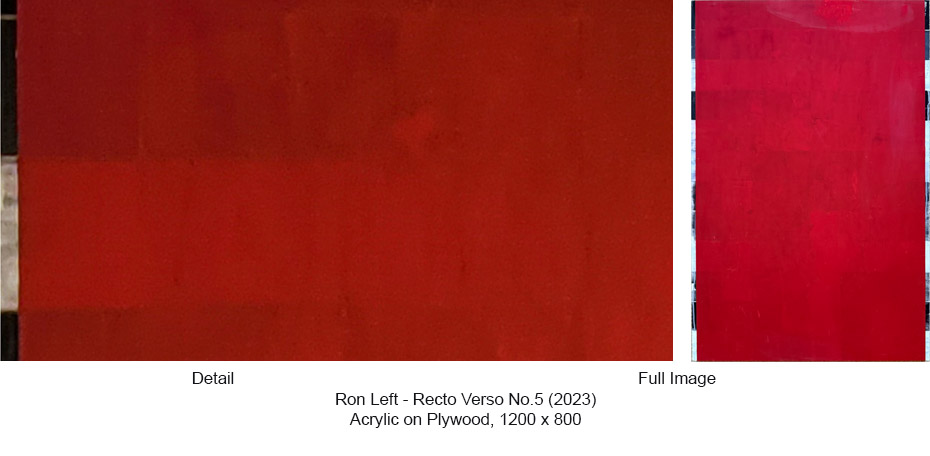
Recto verso (acrylic on plywood)
A sheet of newspaper lies on the pavement, saturated and translucent from recent rain. The underside bleeds upwards to appear on the surface. Disparate stories and images overlap and interfere with each other. Images and text from the underside appear as latent images; half formed and visible before the page has even been turned. This intervention of the virtually invisible medium of water, though accidental and banal, nevertheless hints at something else going on. Opposite sides of a page are caught in a process of becoming each other, of forming mirror images of themselves. Divergent stories and images meld into each other and the fixed parameters delineating text, image and meaning no longer appear fixed. Water has seeped into the pores of the pages,
getting in behind the scenes, dissolving the separation between things. Like some special way of seeing things in their complexity, it dissolves the opacity of surface and separation.