
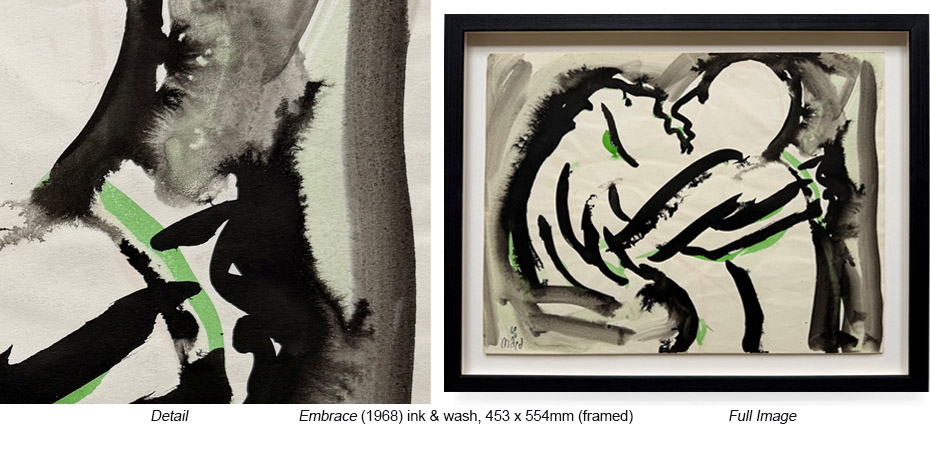
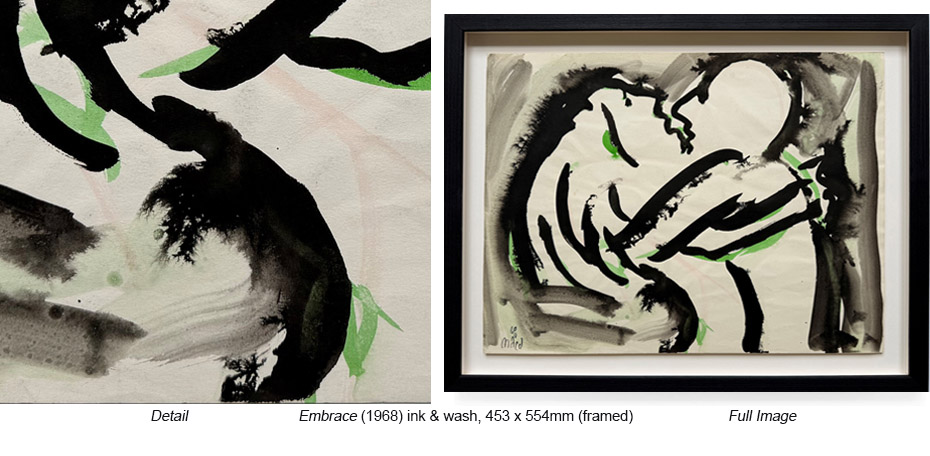
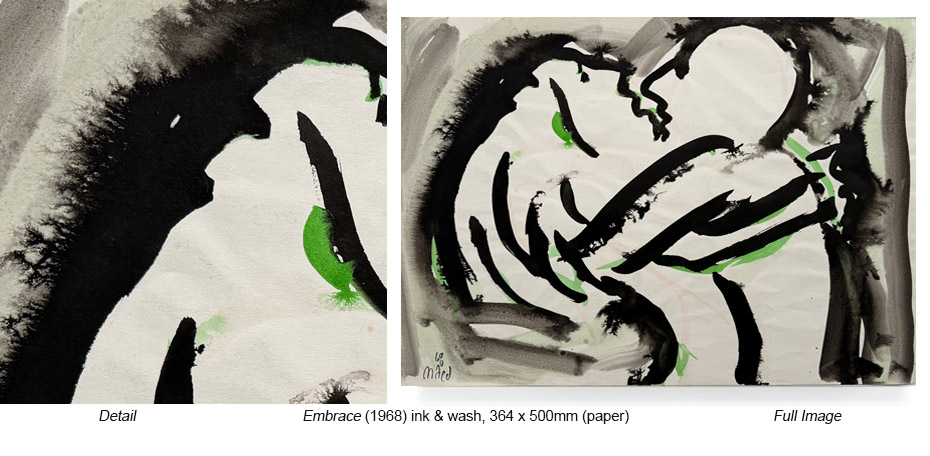
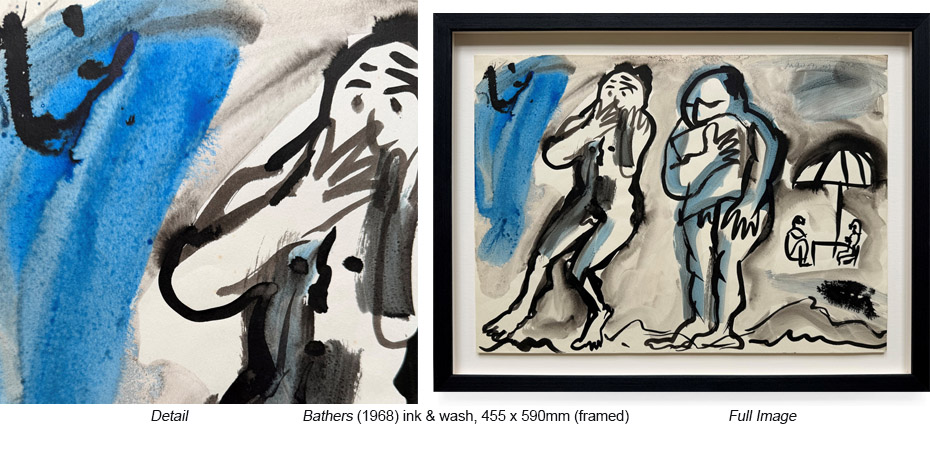
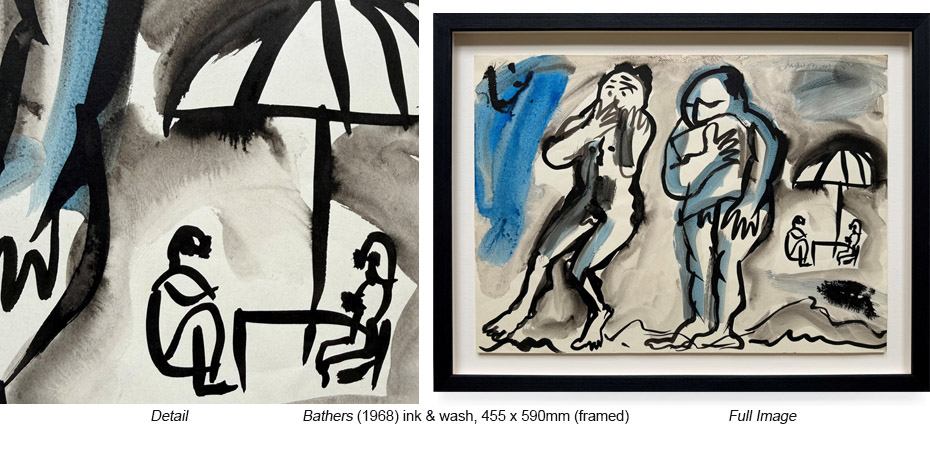
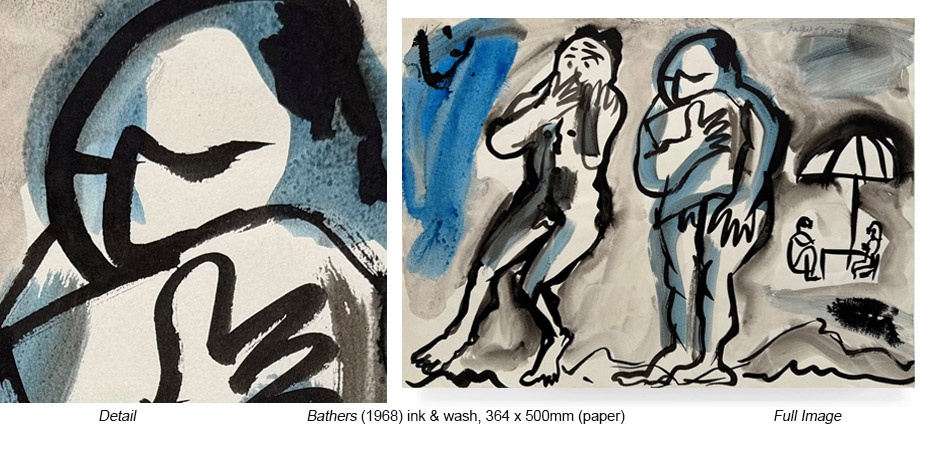
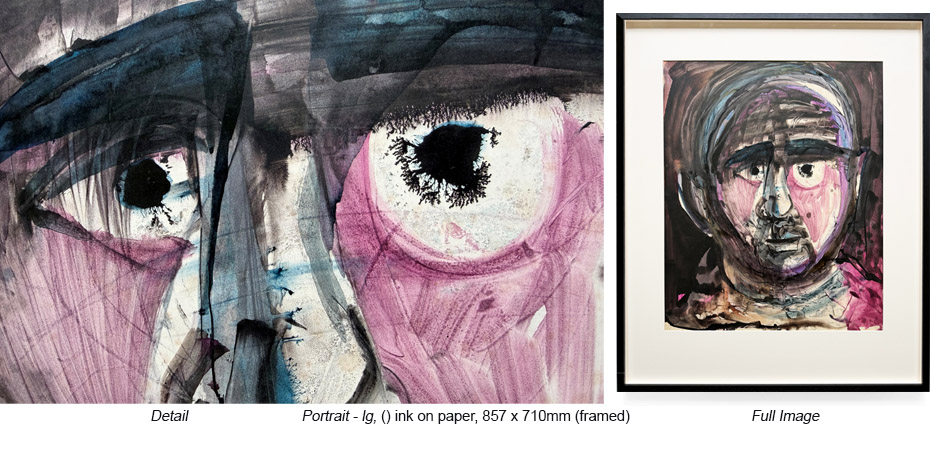
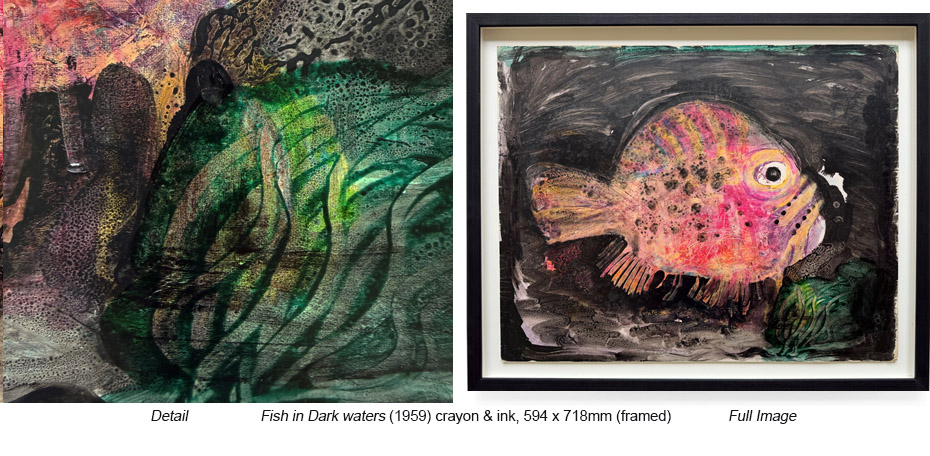
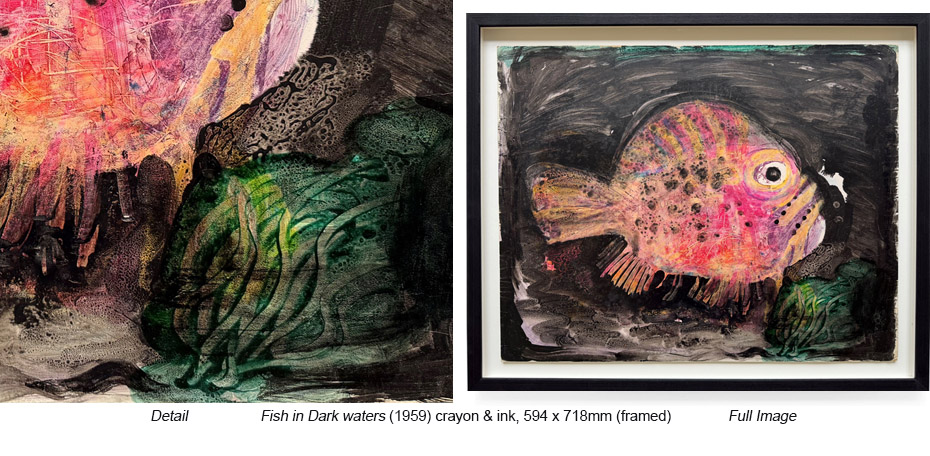
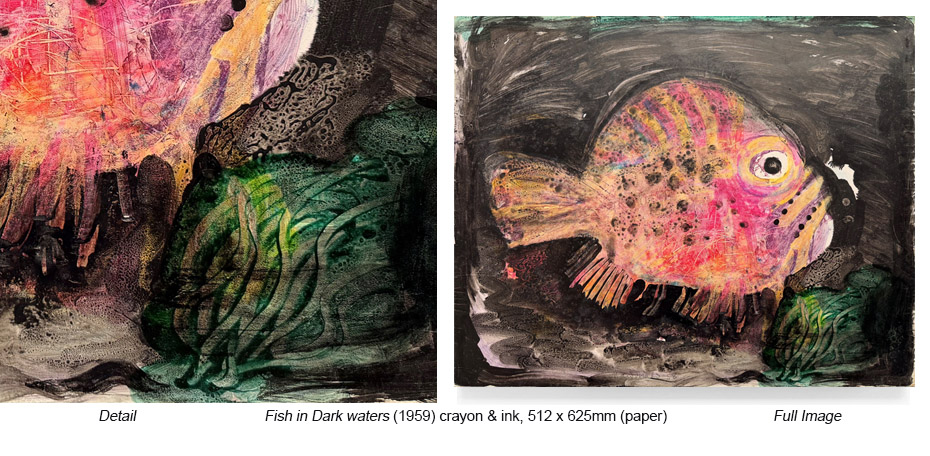
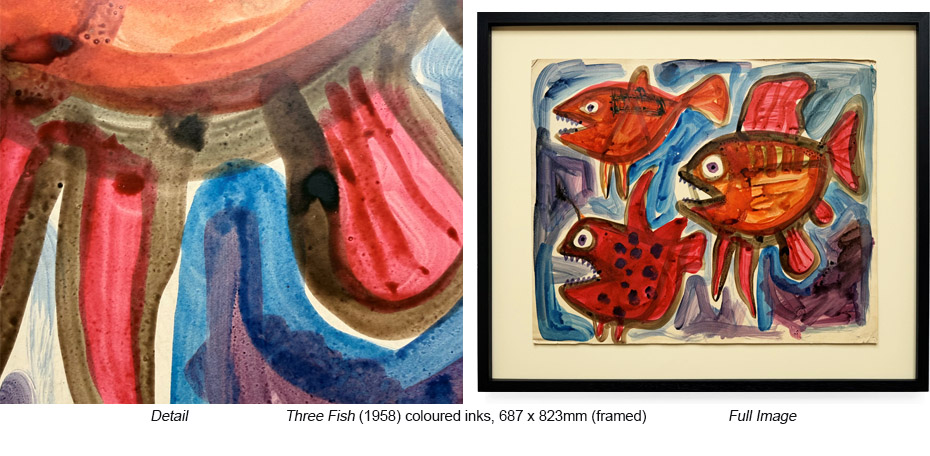
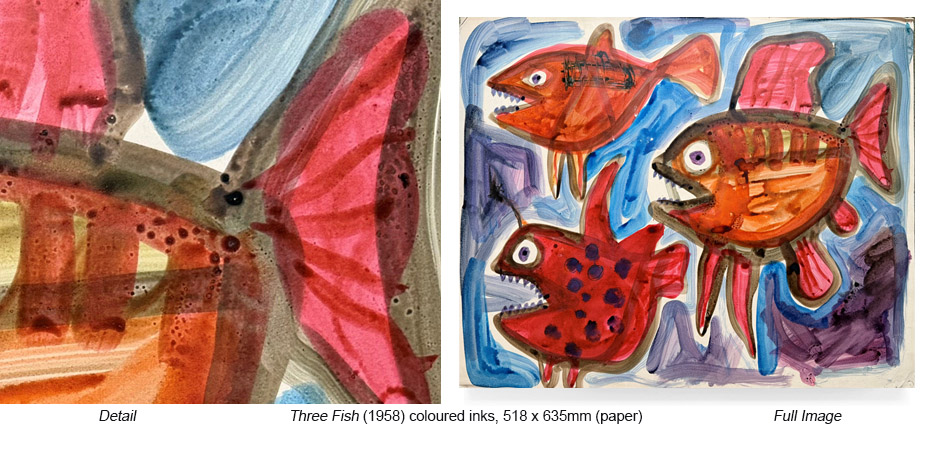
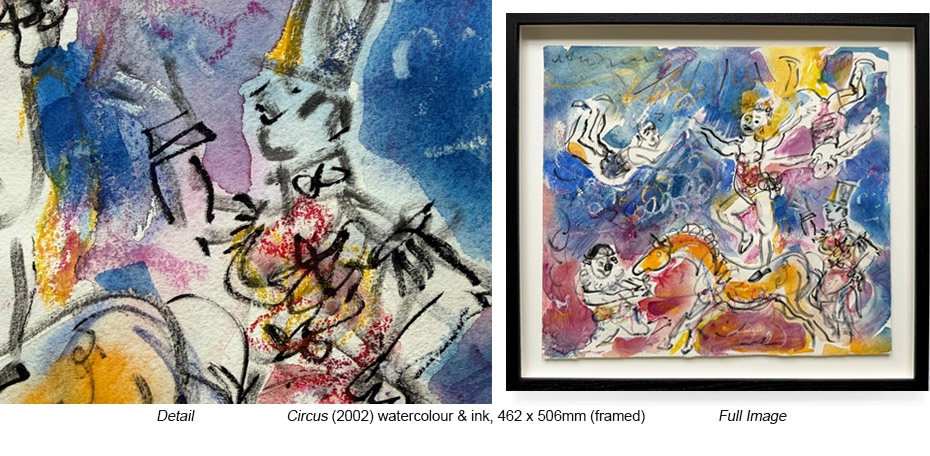
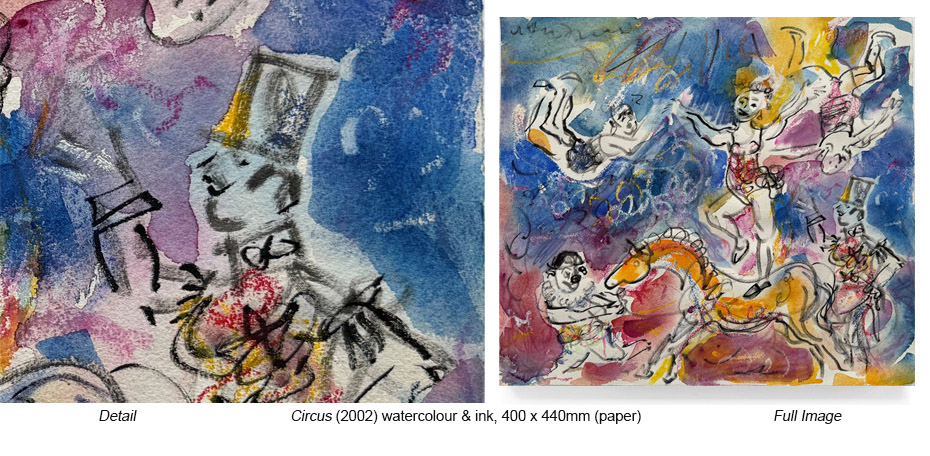
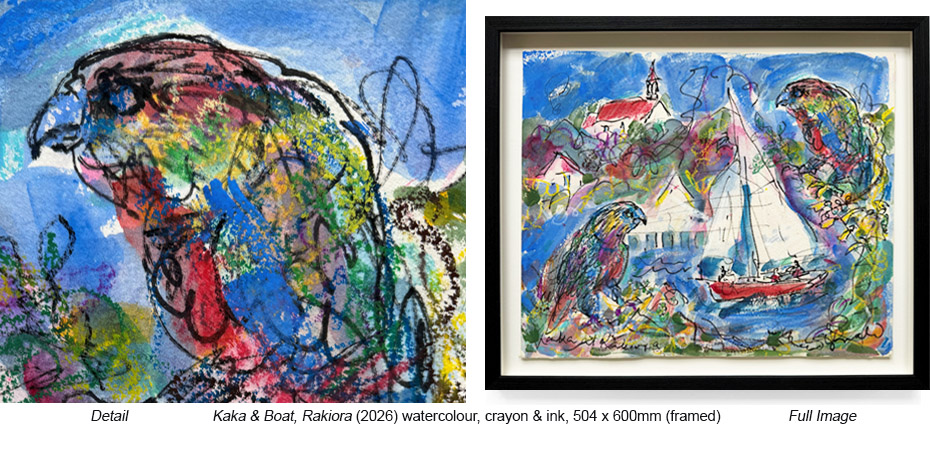
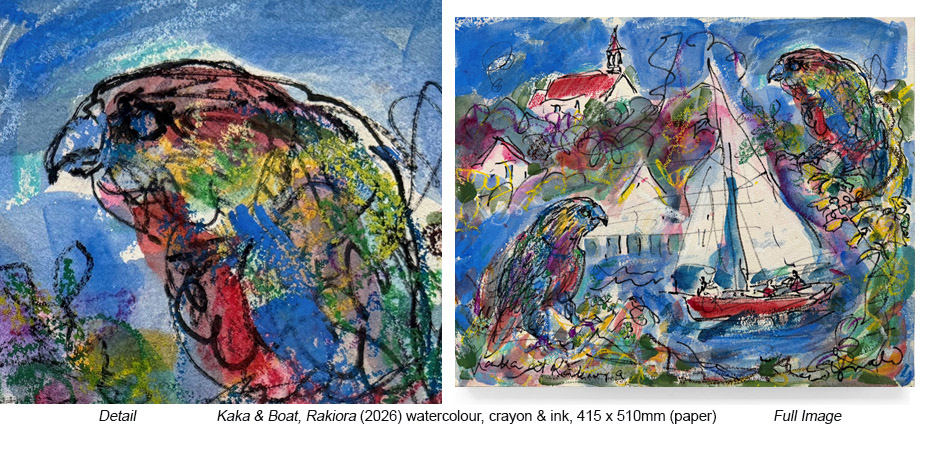
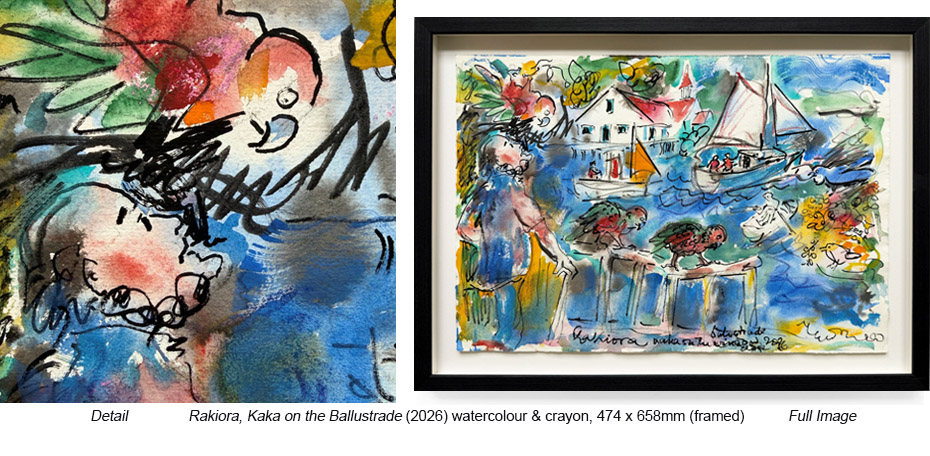
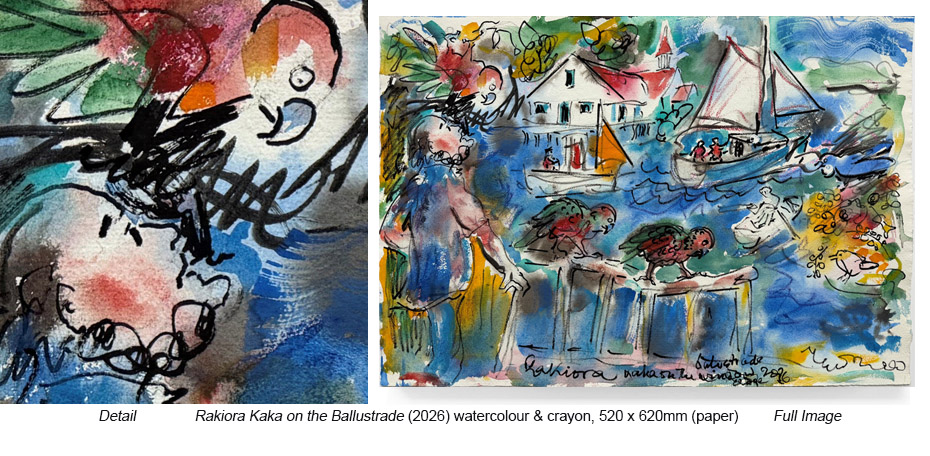
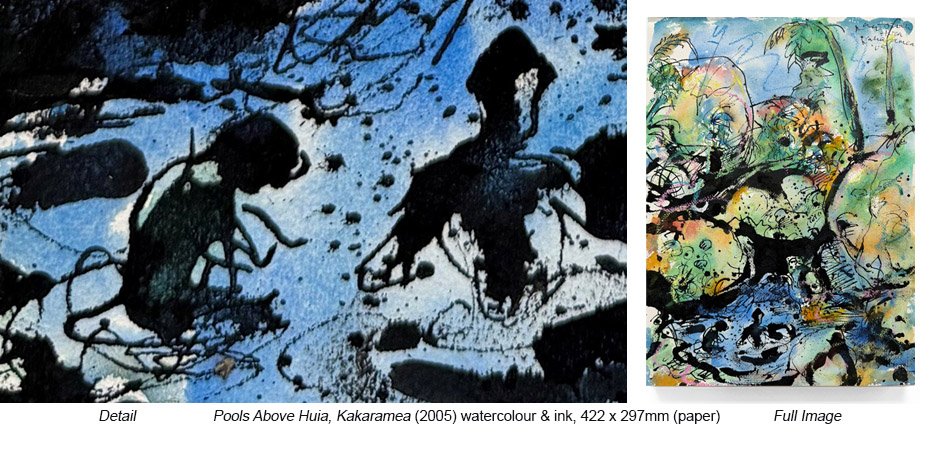
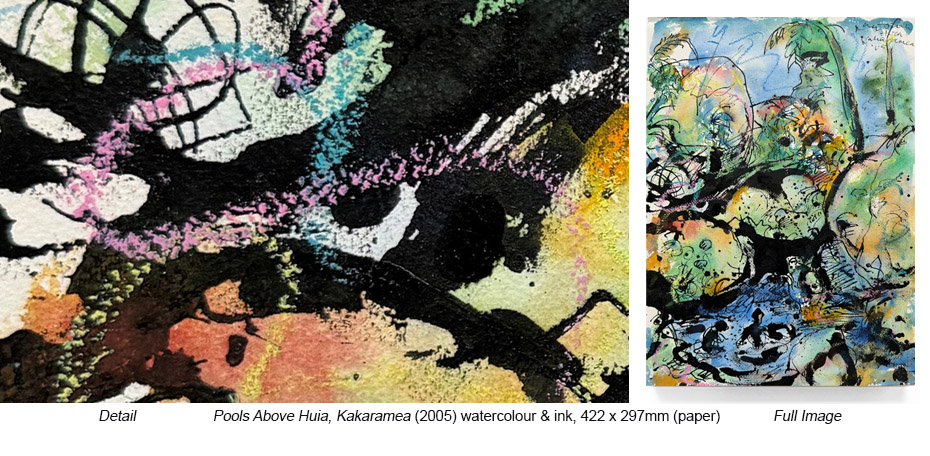
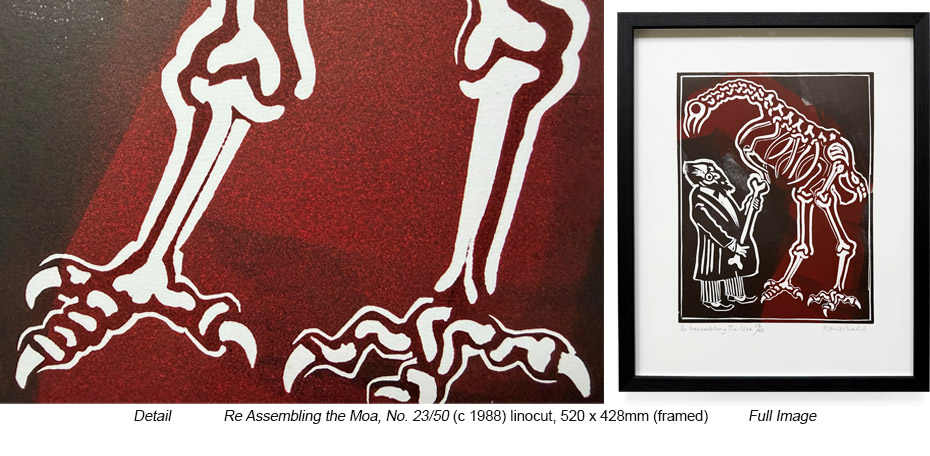
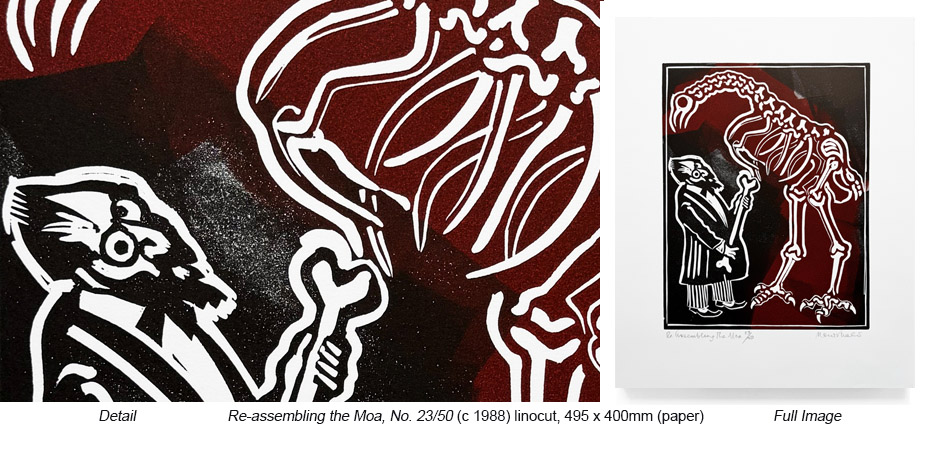
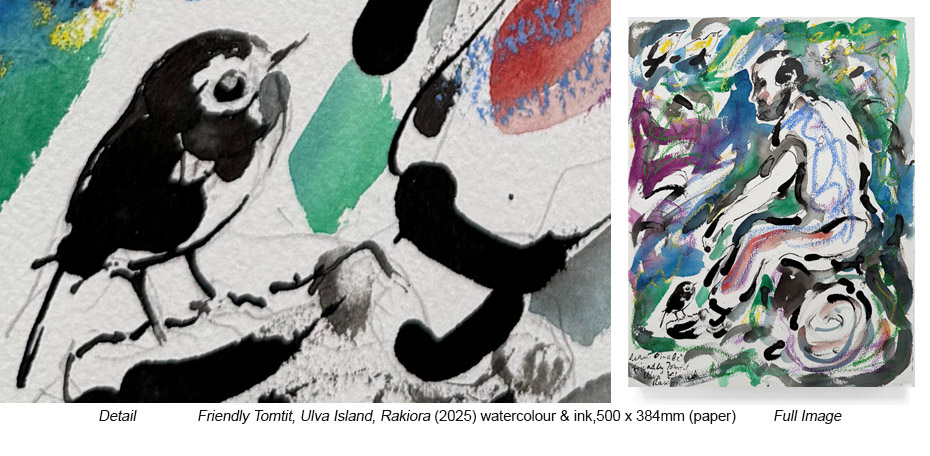
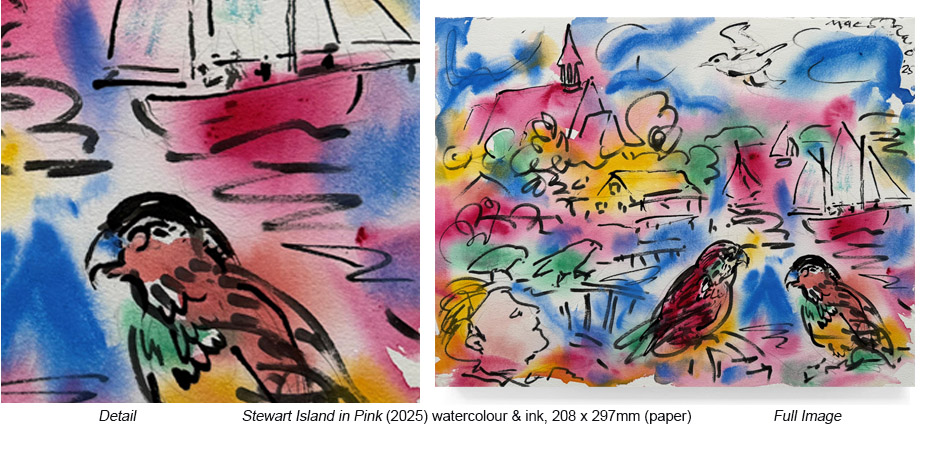
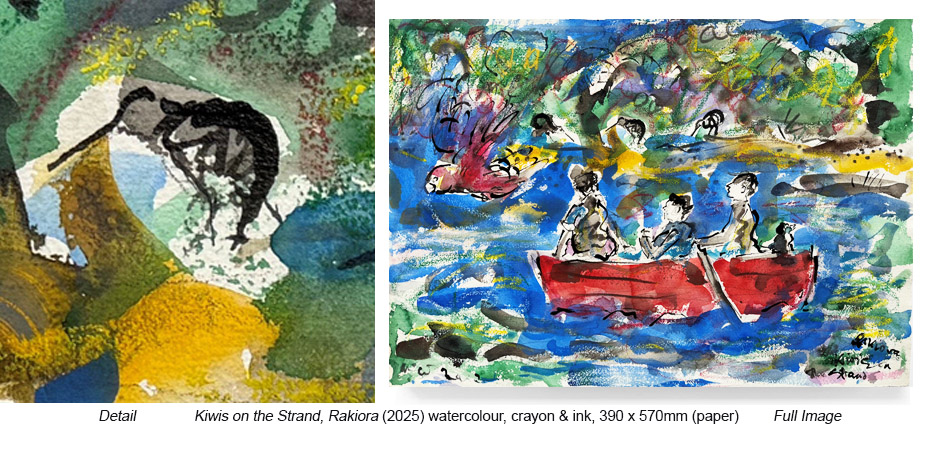
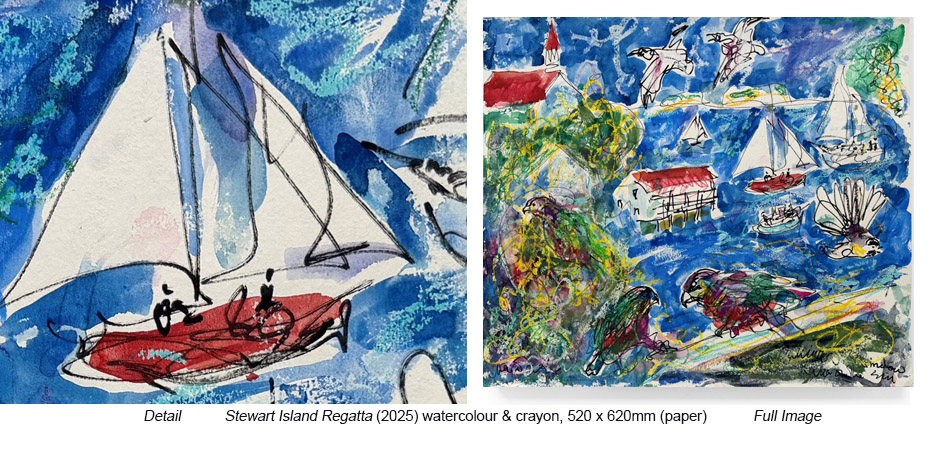
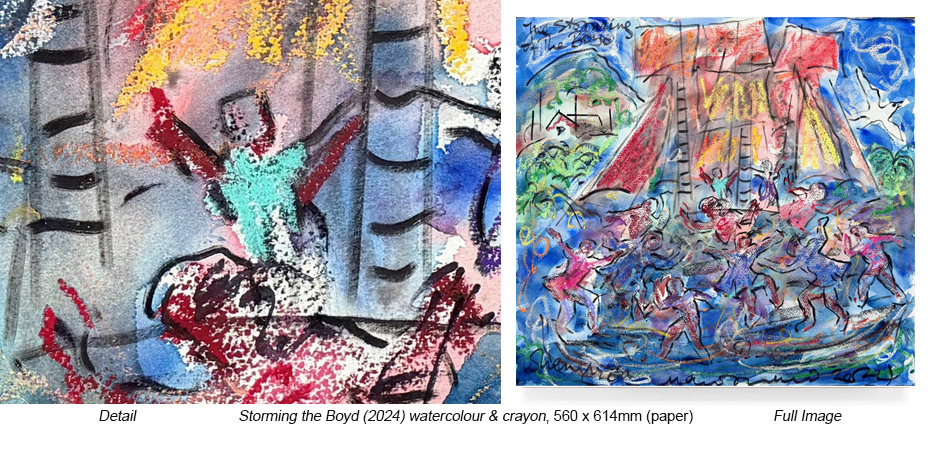
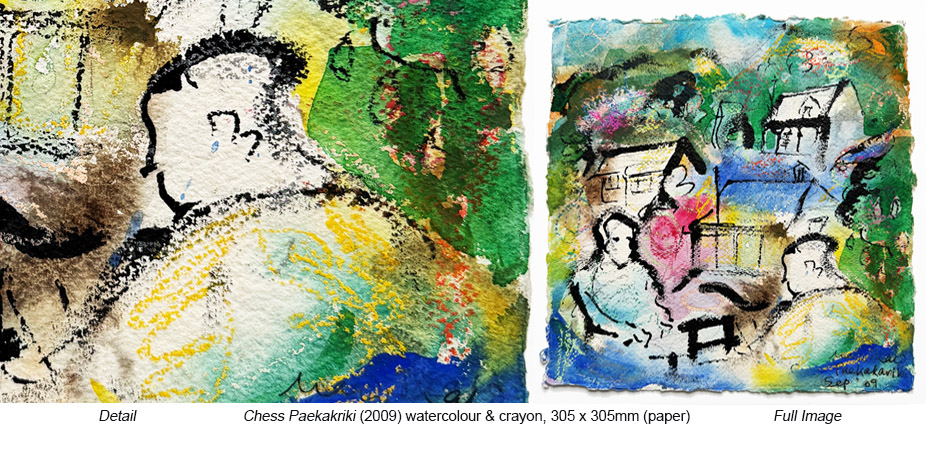
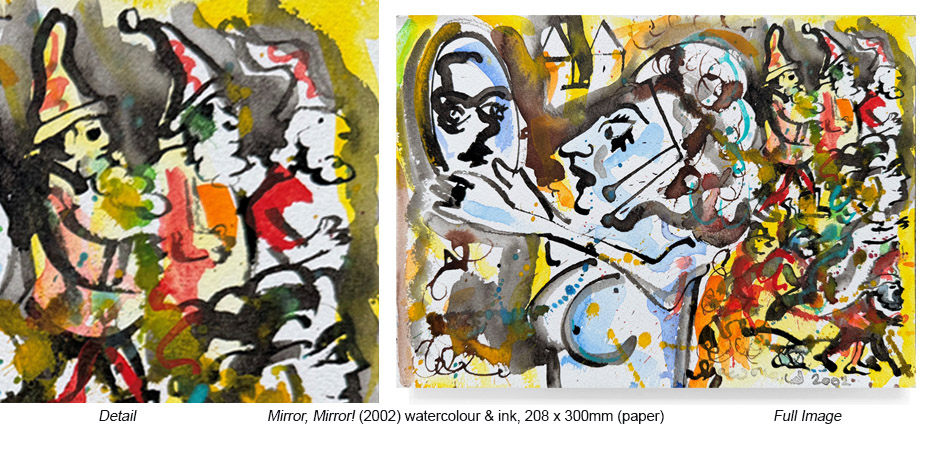
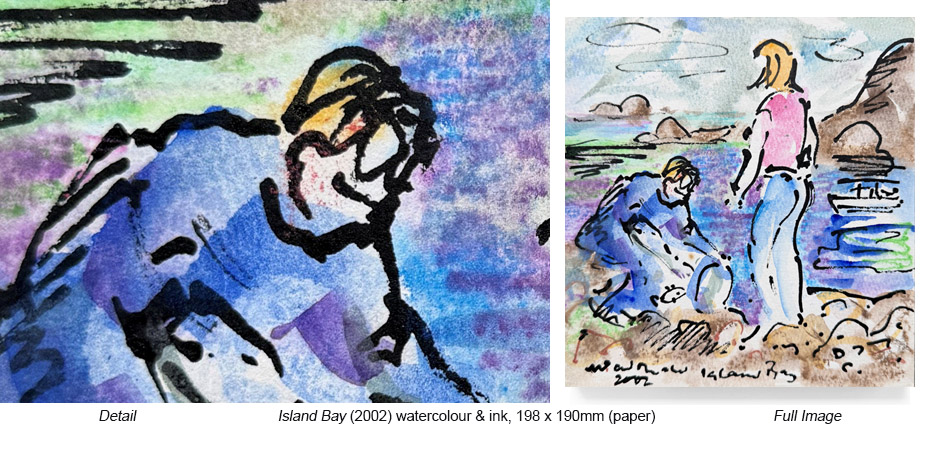
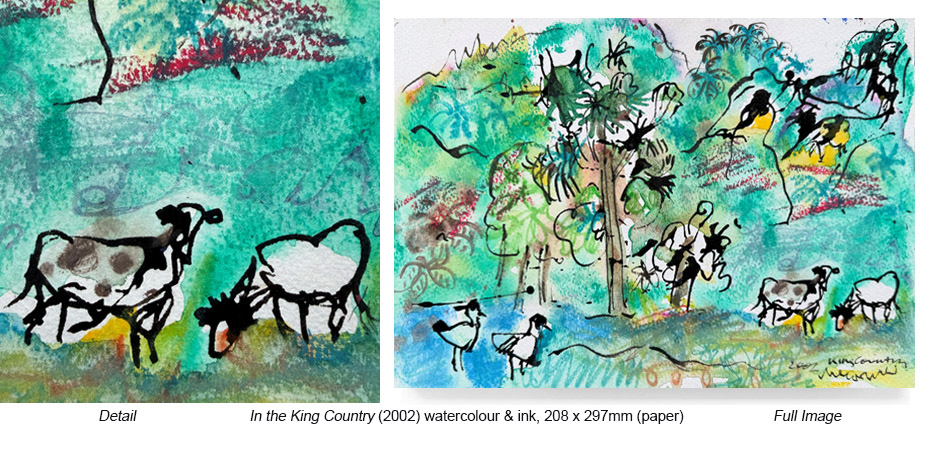
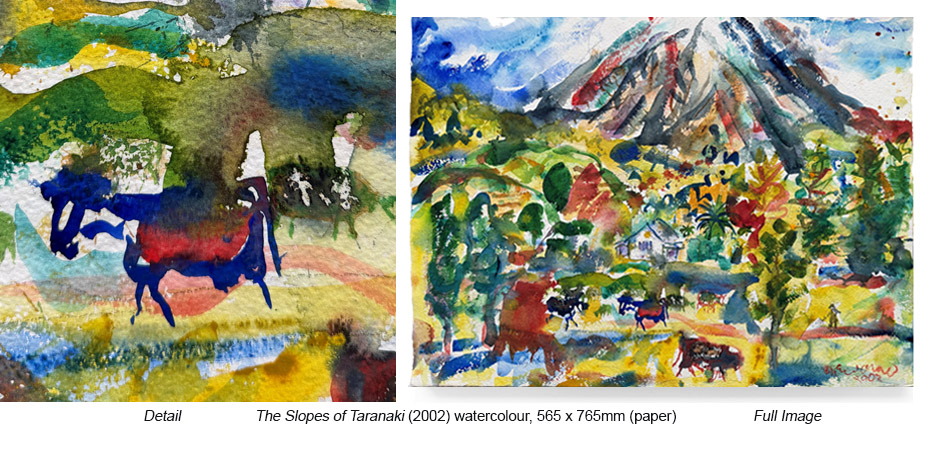
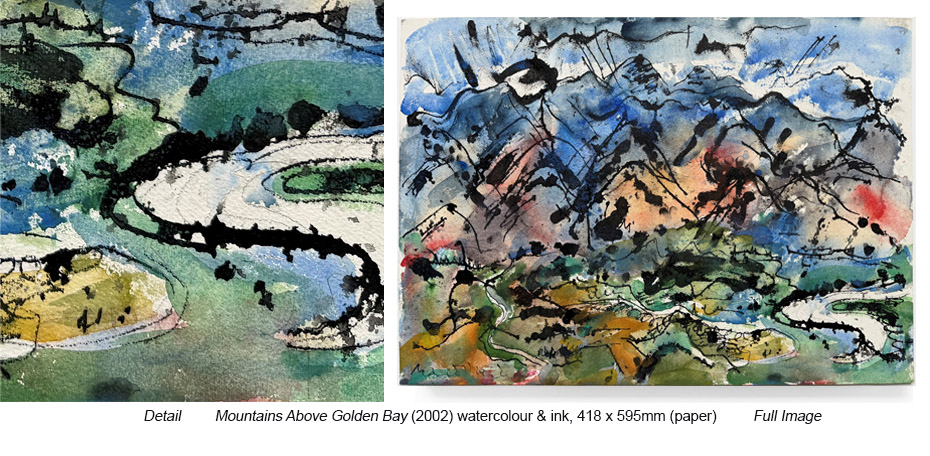
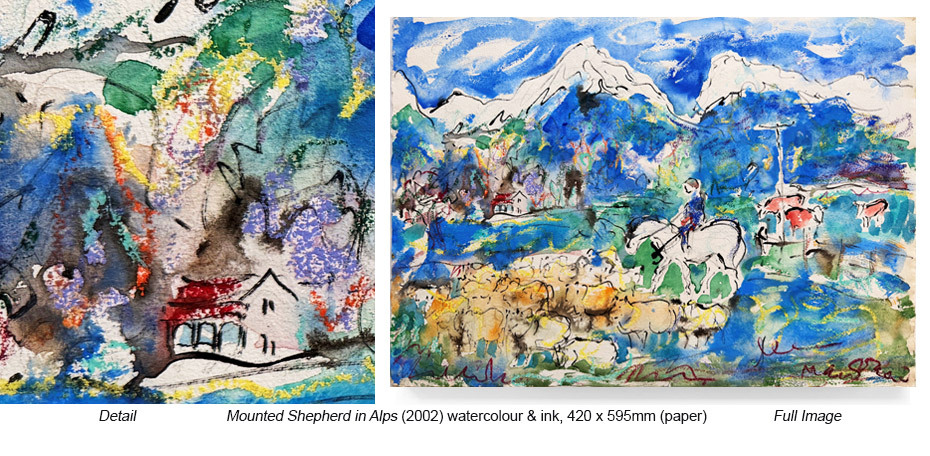
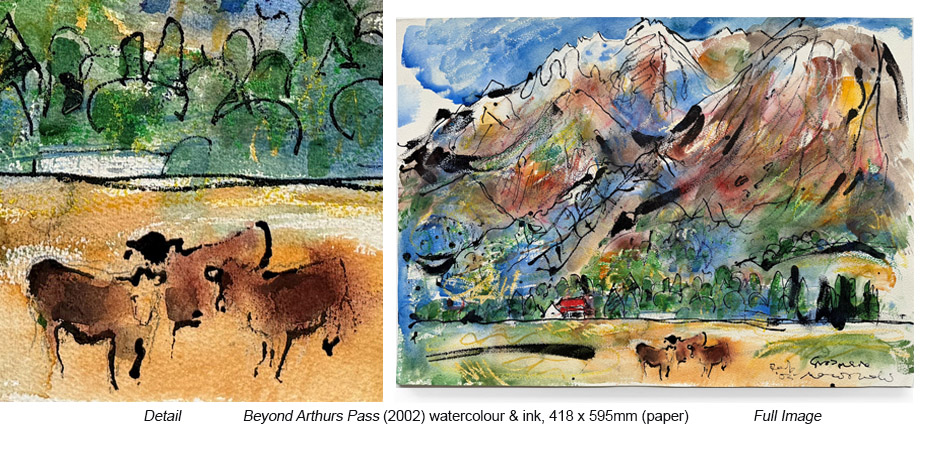
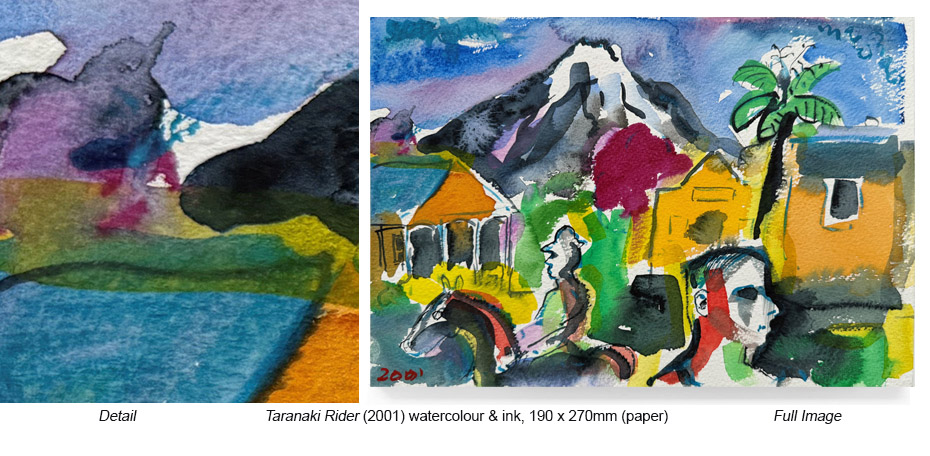
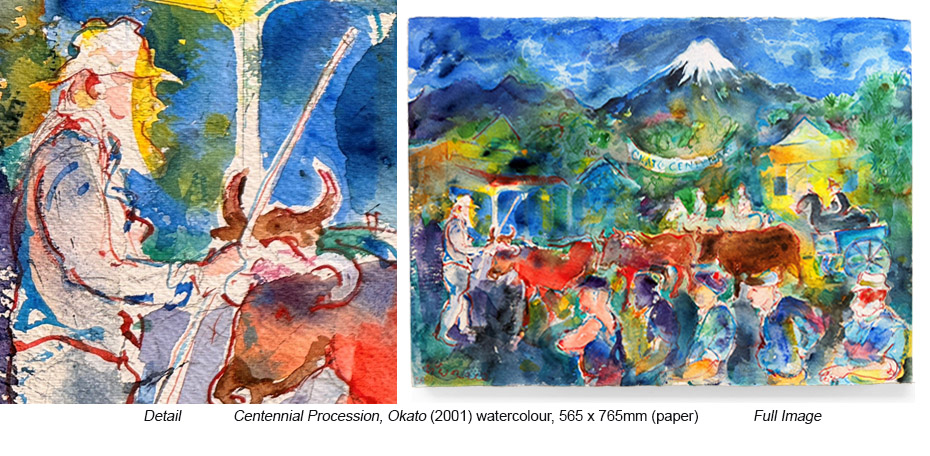
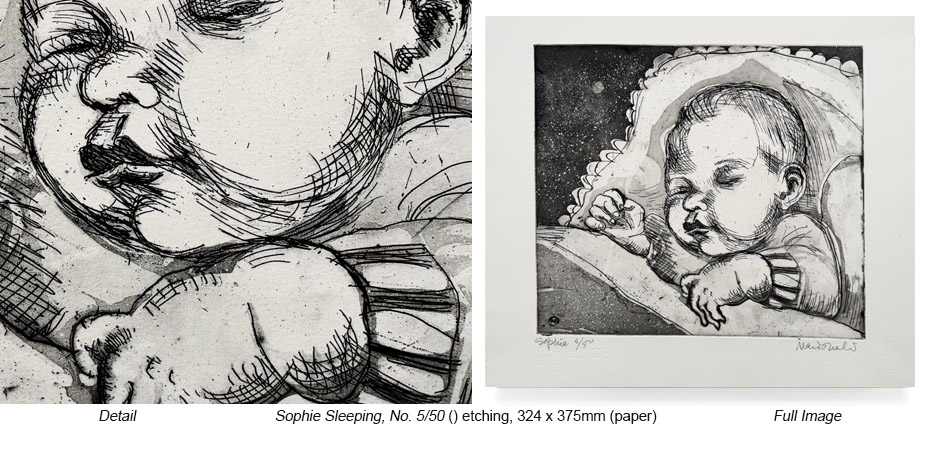
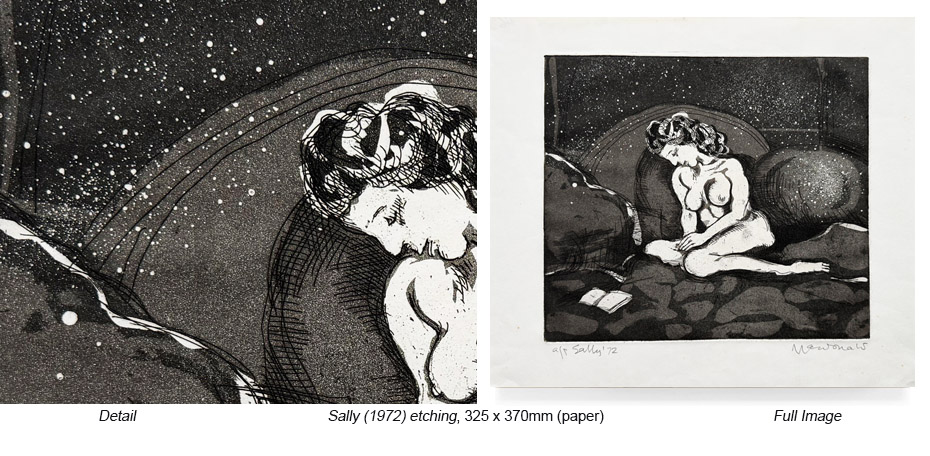
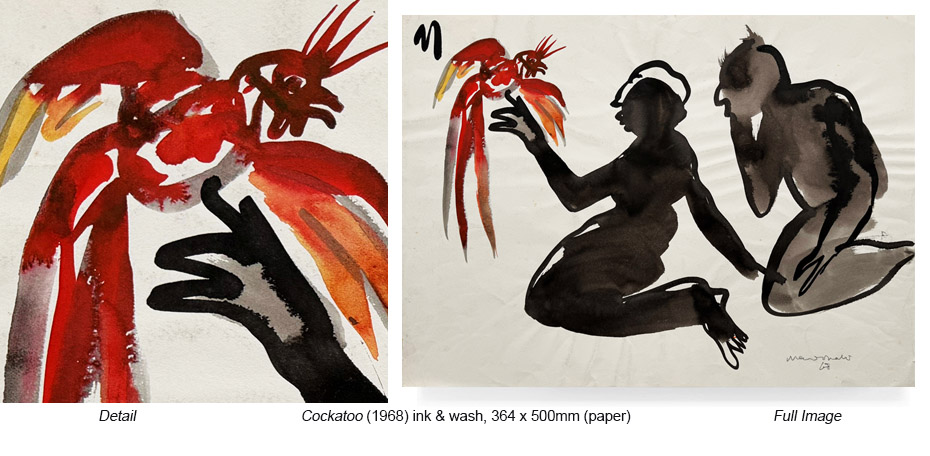
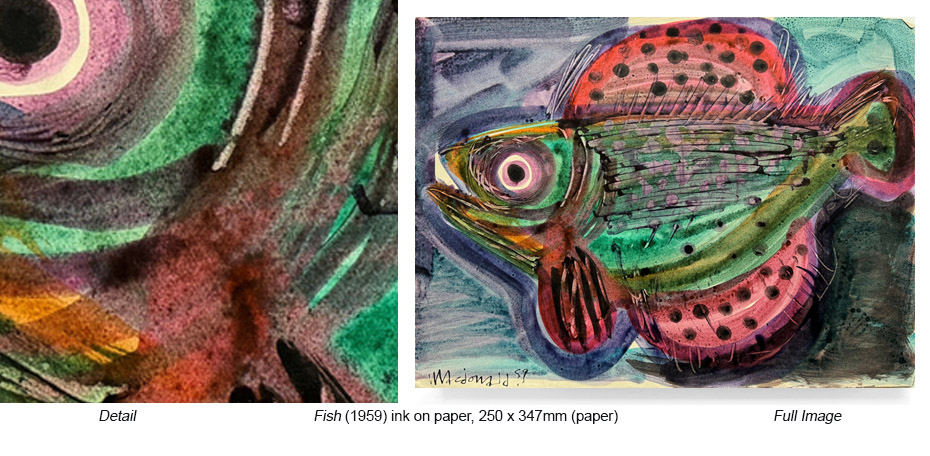
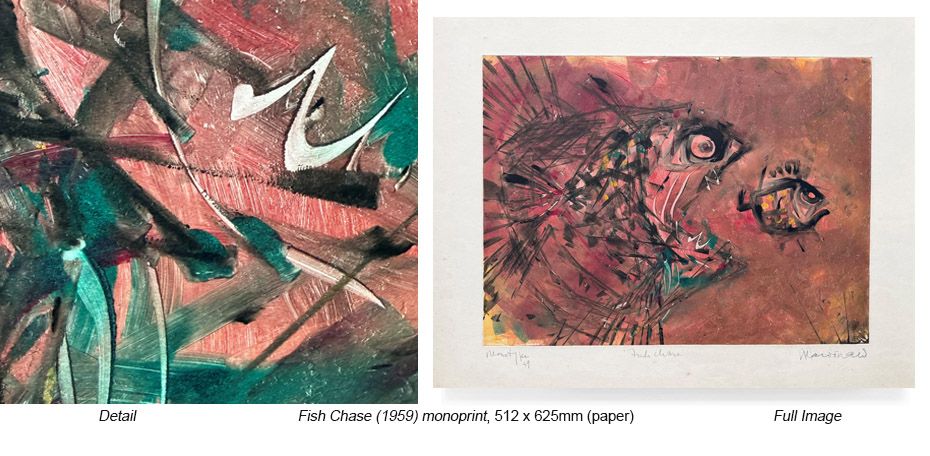
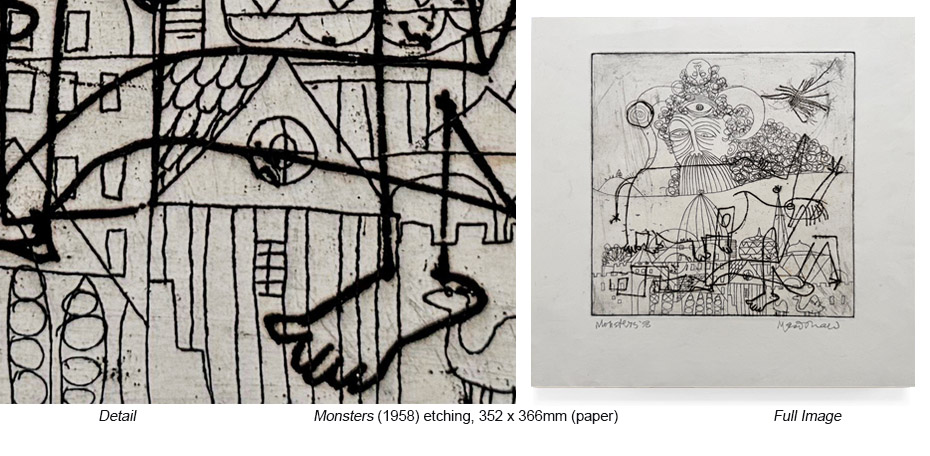
Born in Britain in 1935, Robert Macdonald travelled with his family to New Zealand at the end of the Second World War. His childhood years were dominated and disrupted by the War. The turbulent events of that period continued to intrude on his work as an artist for years, and his father’s descent late in life into alcoholism gave a troubled quality to many of his early paintings and prints. This mood changed dramatically in the 1980s when he went to live in a remote cottage in the Welsh hills. The landscapes, the farming life and the legends of this area of Wales introduced a new and positive – even joyful – quality into his art. The Wayfarer includes works from 1958 – 2026, and includes paintings, drawings and original prints. The most recent works are based on his experiences and observations while visiting Stewart Island during a previous trip to New Zealand for another exhibition at Fe29.
As a young man, Macdonald’s father, a veterinary surgeon, went to work in Africa, in Southern Rhodesia – now Zimbabwe. There he met his wife, Robert’s mother, a South African brought up on a farm near Johannesburg. He took her with him back to Britain in the early 1930s and acquired a veterinary practice in Lincolnshire where Robert was born. When Robert was four years old the war made its first impact on their family life. Having joined the Territorial Army his father was called up as a soldier. He lost his veterinary practice, and the family lost their first home. Vets were needed on the land however, and Macdonald senior was discharged from the Army before his regiment went off to fight in the doomed Norway campaign. Guilty at being separated from his military comrades Robert’s father abandoned veterinary medicine for the duration of the war and trained as a radar technician. The family went to live on the South Coast near a secret radar installation, which was also under the flight path of German bombers. In 1942 they lost another home in a German bombing raid and the family was scattered. Robert was evacuated with his two brothers and went to live on a Somerset farm. Their father remained at work on the South Coast while their sister went to live with relatives in Scotland and for a time their mother worked in a factory making camouflage netting.
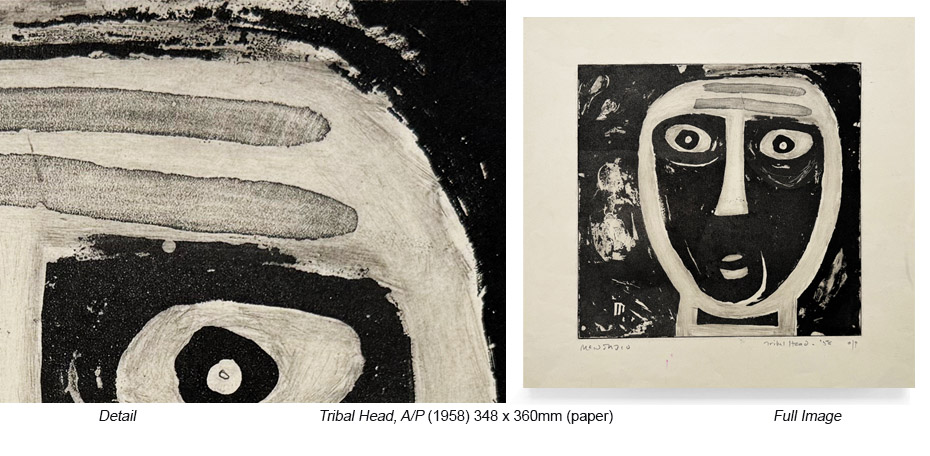
Growing up an evacuee in wartime Britain there were few opportunities to see pictures or even picture books, but Macdonald was fascinated by the rustic carvings he encountered in Somerset churches. After the war, he moved with his family to New Zealand, where his father had taken a job as a veterinary surgeon. Living in an isolated area of New Zealand’s Northland Peninsular there was again little in the way of artistic stimulation but there were local traditions which provided their own visual excitement. He was drawn to the wonderful carvings in Maori meeting houses and the Polynesian tradition of elaborate sculptures of ancestor figures.
Having no opportunity to attend art college Macdonald trained as a newspaper reporter and joined a small country paper, soon moving to the country’s largest newspaper, the Auckland-based New Zealand Herald. While working in the Herald’s branch office in the Waikato city of Hamilton he began painting in his spare time. Becoming a committee member of the Waikato Society of Art, he helped run the society’s small art gallery and, while organising exhibitions there, met and made friends with many artists involved in the rise of Modernism in New Zealand. These included Colin McCahon and the emigre Berlin-born artist Margot Philips who encouraged him, mounting his first exhibition in her family restaurant, the Vienna Cafe, in Hamilton’s Main Street.
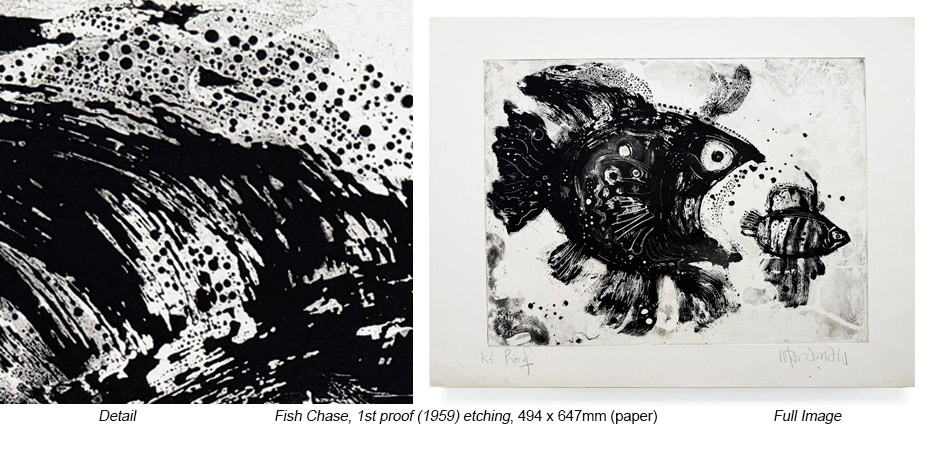
Macdonald left New Zealand as a crew member of a sailing ship in 1958, having been sacked from his newspaper for refusing to shave off a beard grown while on another sailing expedition. Arriving in Australia he travelled on to Italy and then to Britain where he enrolled as a student at the London Central School of Art. Having spent his earliest years working in the print room of a country newspaper he felt immediately at home in the inky surroundings of the Central’s etching workshop. He had premature success when one of his first etchings was selected by the St. George Gallery in Cork Street for the first Graphic Art exhibition in the Whitechapel Gallery and then sent in a prestigious exhibition of 25 British Printmakers to America. He was the only unknown. Without the resources or the support to sustain a painterly career in a strange land he was soon forced to find employment again. Throughout the 1960s he worked in Fleet Street becoming for a period a writer on Africa’s independence movements in the London office of The Scotsman. As a journalist he was fascinated by African politics, his parents’ stories of life in Africa when they were young feeding his interest in that continent.
He travelled in Africa as a correspondent for The Scotsman and in the late 1960s he was appointed their London art and theatre correspondent. He left journalism again in 1970 to paint and study etching but running out of money once more he returned to work as a government press officer. He was sent to work in the Foreign Office News Department and soon found himself travelling with Foreign Minister James Callaghan to Uganda to rescue a British lecturer from Idi Amin’s prisons. He went around China, Arabia and the United States with visiting foreign ministers. In 1976 he turned his back on journalism once again. Despite having no first degree, he was offered a place as a mature student in the painting school of the postgraduate Royal College of Art. After taking his MA he went to the Central School for the third time to study advanced printmaking techniques. He also taught part-time in art colleges and continued to write on art for various journals.
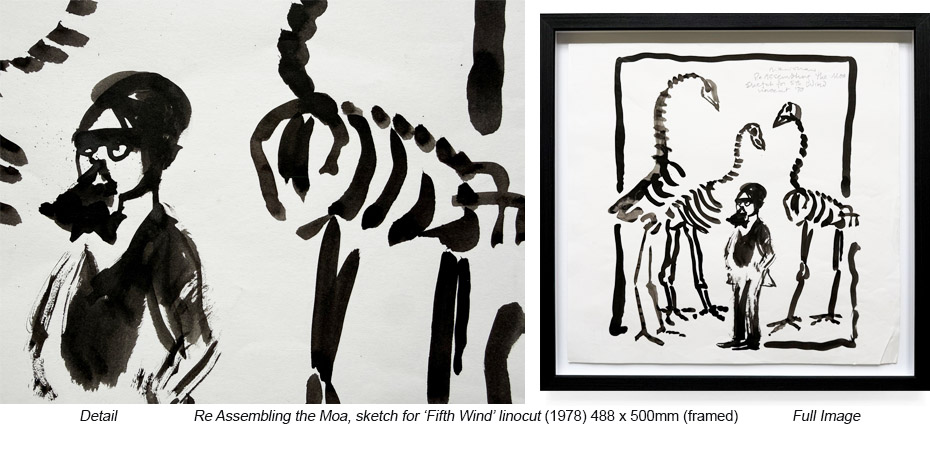
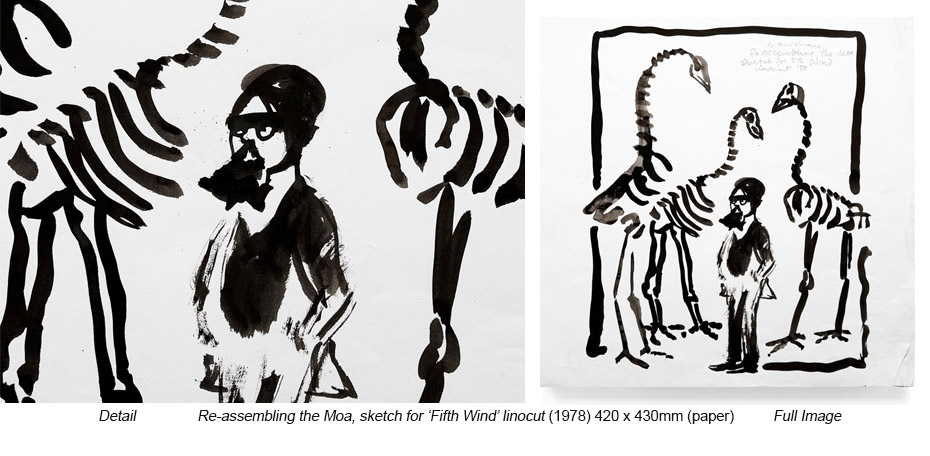
In 1983 Macdonald returned to New Zealand having been commissioned to write a book on the changes which had been taking place in that country since his departure in 1958. Fascinated by the revival of Maori culture, he was invited by the Tainui tribal leader Robert Mahutu to join the Waikato tribes as an honorary Maori on the famous hikoi – a protest march from the Waikato to the Bay of Islands. Asked to assist the tribes with his writing skills, under Mahuta’s direction he drew up depositions which the Tainui later presented to the Government and Crown listing Maori take – or hurts – and asking for the restoration of promised rights under the Treaty of Waitangi of 1840. He wrote of his experiences on this hikoi in his book ‘The Fifth Wind’, published in Britain by Bloomsbury and in New Zealand by Hodder & Stoughton, and illustrated the book with his own linocuts, several of which are included in the exhibition. The book met with glowing reviews, the author Michael King describing it as compulsory reading for all New Zealanders. When a Labour government came to power in New Zealand under David Lange a number of the depositions Macdonald had written found their way into law.
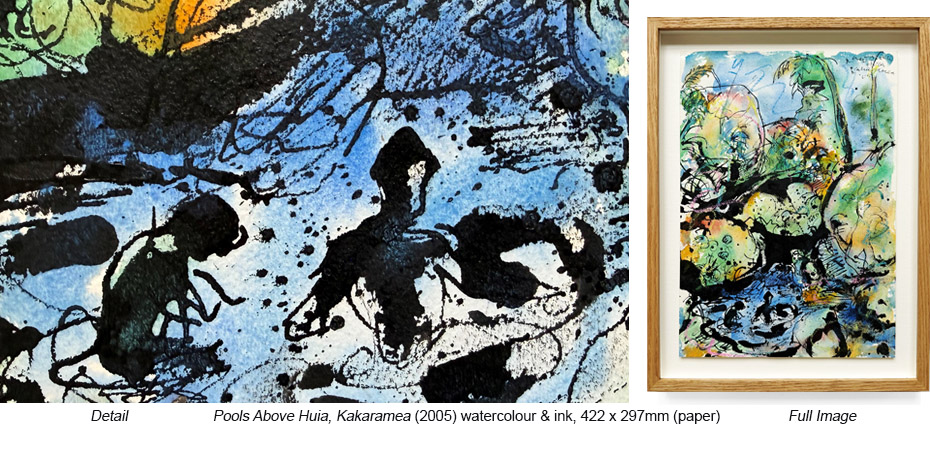
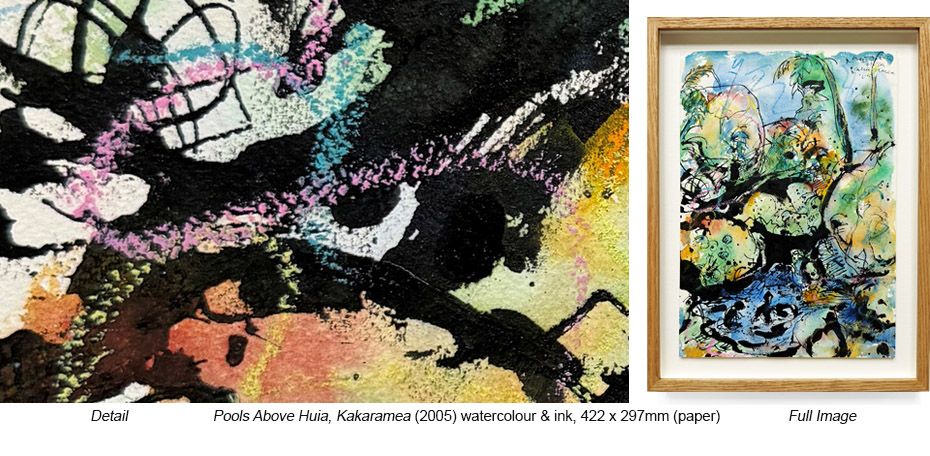
Macdonald took over a remote semi-derelict cottage in the Brecon Beacons to write much of this book, and he found himself at home in the Welsh countryside. There was no road to his cottage, but a friendly local farmer supplied help at transporting goods with his tractor and Macdonald in turn helped with the haymaking. He found the farming community very similar to those communities he had grown up with in New Zealand. Wales is also mountainous but, as he tends to tell people, the hills do not explode as they can do in New Zealand. Having completed the book, he began walking the Welsh hills, painting landscapes and drawing on local myths for inspiration. He has been doing that ever since (with regular return visits to New Zealand where he has also painted in the hills).
In Wales he was able to take forward his relationship with printmaking when he joined the Swansea Print Workshop. In 2023 the workshop sent him to Pakistan where he taught in the National College of Art in Lahore for a short time and opened an exhibition of Welsh printmaking. His Welsh and his New Zealand paintings have won a number of national awards. He was twice a prize winner in the Sunday Times/Singer and Friedlander National Watercolour Competition and in 2005 won the Winsor and Newton first prize in the Royal watercolour Society’s 21st-Century exhibition in London (with two New Zealand paintings) and the following year in the same exhibition won the St Cuthbert’s Mill award – and he has been exhibiting widely ever since including in New Zealand where three exhibitions of his paintings and prints have been held in recent years in Dunedin, capital of New Zealand’s Scottish community. In 1997 the Brecknock Museum and Art Gallery in Brecon mounted a large retrospective of his paintings. In 2014 he became the first elected president of the Royal Watercolour Society of Wales and he is a past chair of the Welsh Group. As a printmaker his pictures have been exhibited in the European Parliament in Brussels and they are held in public galleries including the Victoria & Albert Museum’s print collection.
On his father’s side Macdonald’s family had deeply Celtic roots. His grandmother with whom he was very close when young was a Gaelic speaker raised in the Outer Hebrides on the Isle of Lewis. His grandfather came from Ireland, descended from Scots who fled there after the 1745 Highland Rising. Especially in his etchings Robert has drawn on this family history and linked his Scottish stories with his Antipodean experience. In New Zealand many of his family’s neighbours were descendants of a Highland Scots settlement on the Northland Peninsula. Over the years painting and printmaking have provided him with a means to explore this tangled knot of memories and cultural influences – Welsh, English, Celtic, New Zealand, Polynesian and South African – and to draw rich imagery from them all.