

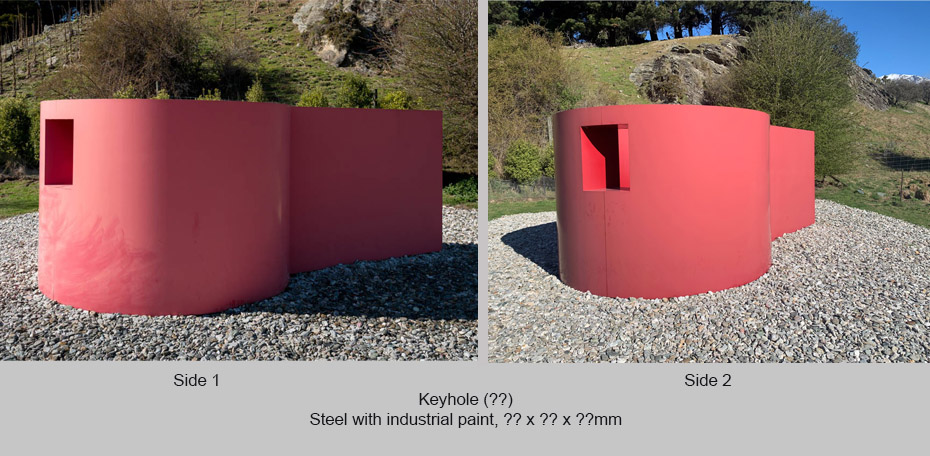
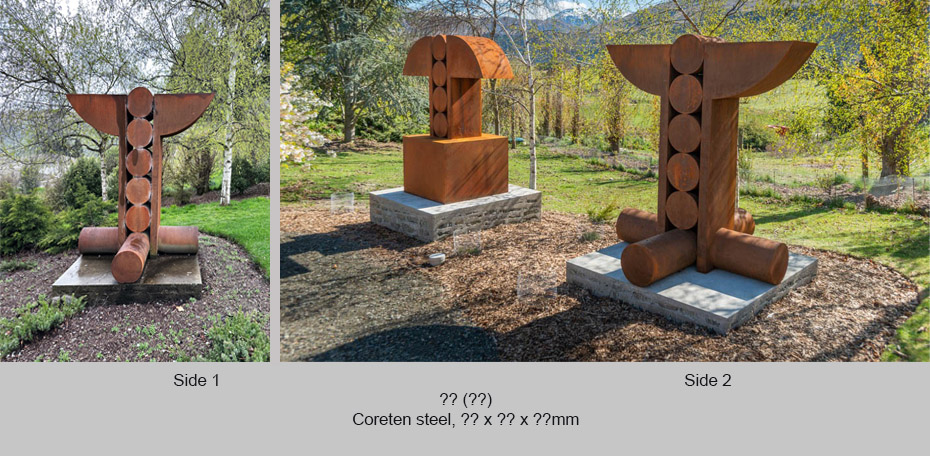
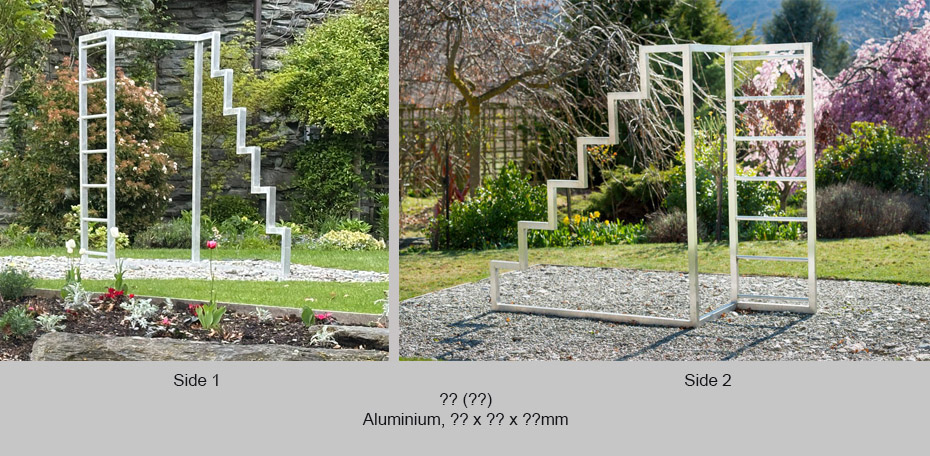
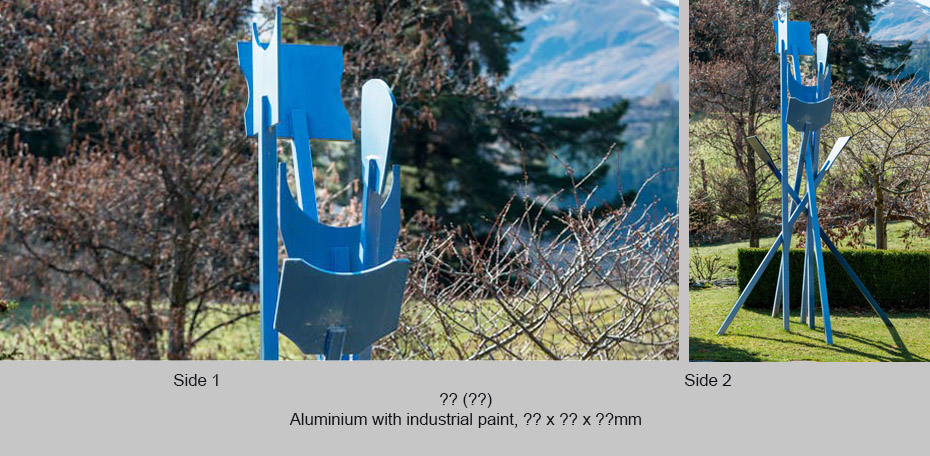
Born in Surrey, England in 1934, Morgan Jones was living in London at the time of Blitz. The experience of spending many of his schooldays locked underground in a claustrophobic air raid shelter left him with both an abiding horror of fascism and an appreciation of the physical and psychological power of architecture.
A self-taught artist and author of detective fiction, Jones has been making sculpture since the mid-1960s. National recognition came in 1975 when he received the Hansell’s Sculpture Award and in 1985 he was profiled in Art New Zealand. Currently represented in many private and public collections, his 2004 sculpture, SCISSOR stands on the Christchurch Art Gallery forecourt. Made from painted steel and standing almost four metres high, SCISSOR is a classic example of Jones’s elegant and playful sculptural practice. Its symmetrical black sections interlock and oppose each other to form what Jones has described as a ‘visual anagram’. Like all of his work, SCISSOR had its origins in an ordinary object – a Yale padlock. As Jones has said, “the best things you make are simple – they shouldn’t be complicated at all”.
In 2004, Christchurch Art Gallery hosted a major retrospective of Jones’ work: Journeys and Decisions, and in 2019 he became the first New Zealand artist to win the Aqualand Sculpture Award, Sculpture by the Sea, Sydney. His Coreten steel sculpture The Sun Also Rises, was gifted by Aqualand to be part of the North Sydney Council’s public sculpture collection.
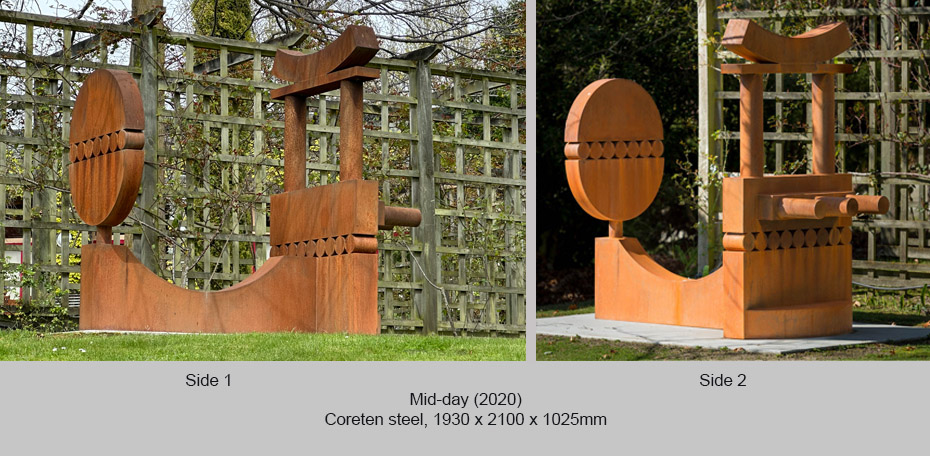
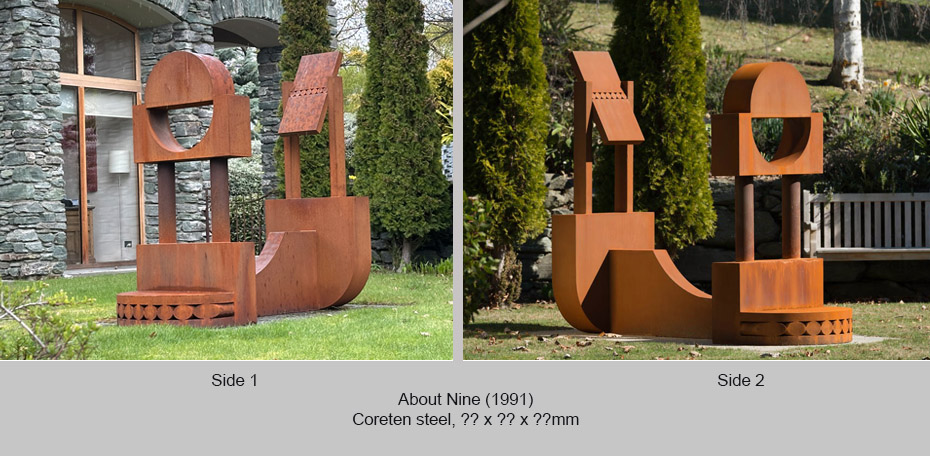
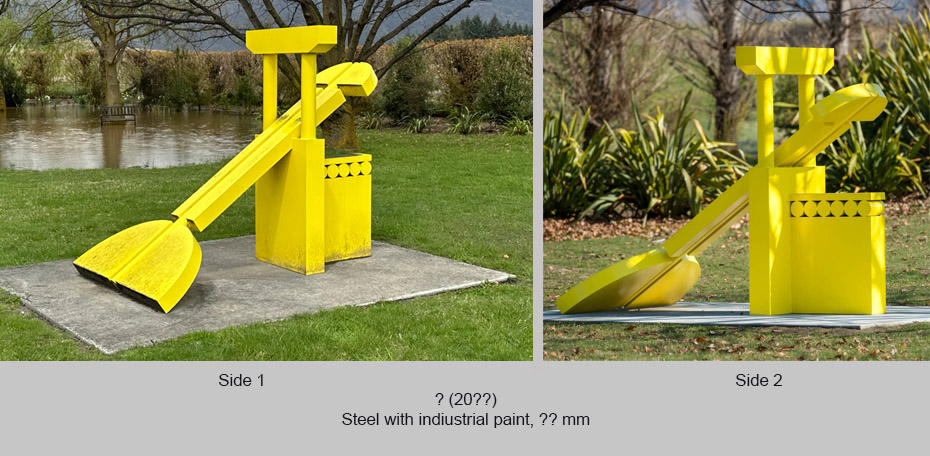
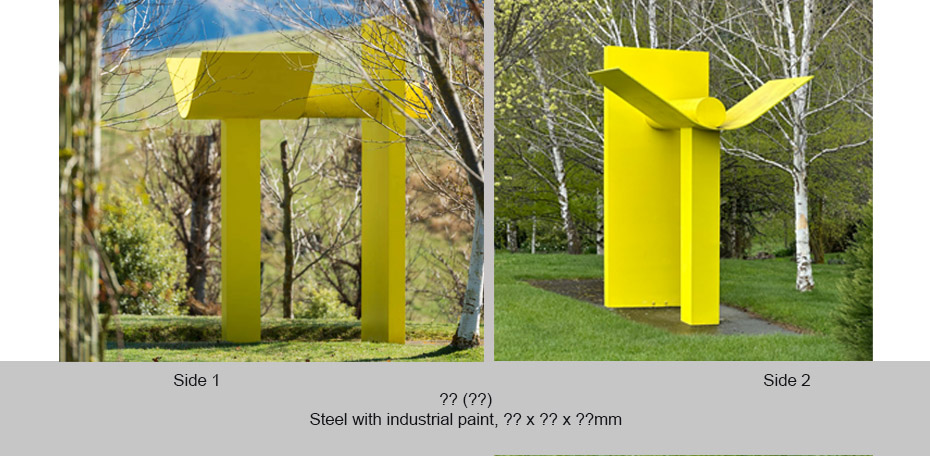
Jones’ work offers simple yet rigorous constructions that celebrate the work ethic and labour of farm industry and its machinery. Each is a proposition and an enquiry, that shuffles chosen elements and fragments to resolution point. He sculpts out of visceral conviction, wanting to simplify the complexity of functional objects and charge them with symbolic significance. He engages in an incessant making and remaking to arrive at satisfying assemblages of components. There’s an authenticity to the way he represents craftsmanship involved with agrarian labour – either as an observer or participant, he has experienced shepherding, sheep shearing, crop planting, harvesting, haymaking, scything, tree-felling, digging, pruning, and splitting wood.
There is a sense of exploration in Jones’ work – a sense of someone testing and trying-out solutions and developing sequences of scale models, impelled by the tension of immediate discovery. It’s as if he’s always anticipating the feeling of breaking through to uncharted territory. His art offers an expulsion of the inessential, in search of how sculpture might best represent our experience of time and memory and inhabiting the world. His presiding metaphor is the industrial machine, but pared down and made abstract, anchored by gravity. His distinctive and consistent approach to sculpture, with its comic touches, has as its context the pragmatism and functionality of New Zealand primary production: forestry, agriculture and mining. At heart, his work is in dialogue with the industrial basis of modern society. He both exults machinery for its easing of our labours and decries machinery for its ability to imprison us and make us march to its rhythms.
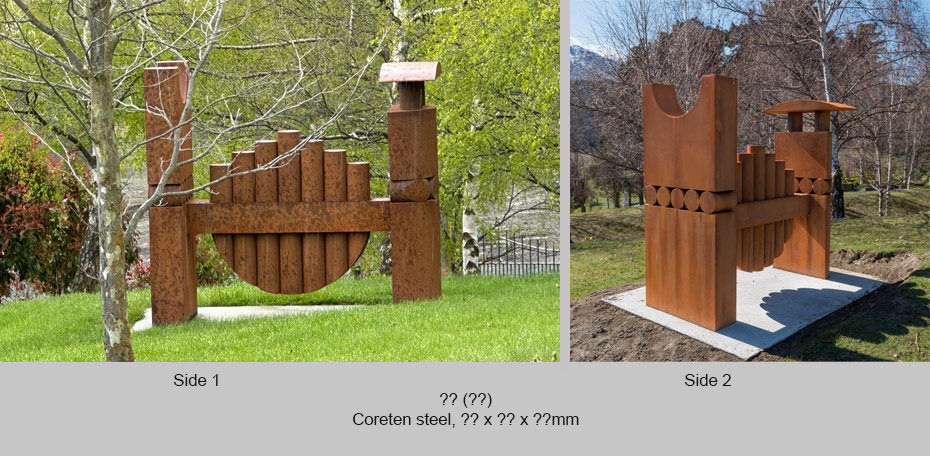
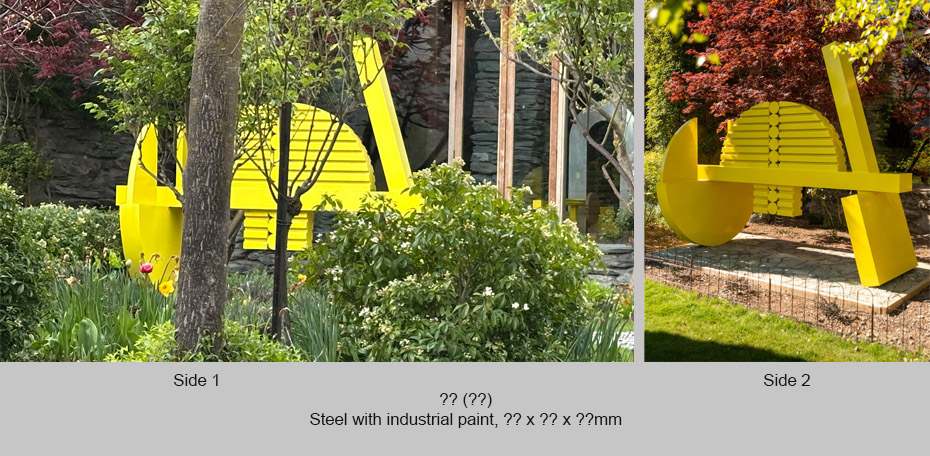
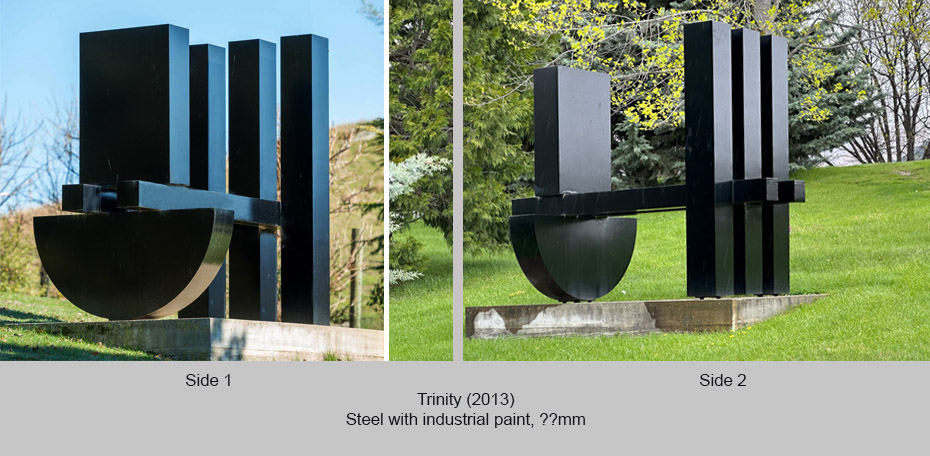
There are a few simple shapes that Jones has often used in his sculpture. These select shapes are there to condense and strengthen the visual rhythms found in the various tangle of objects that make up the industrial world. The shapes are also rich in associations. The curve for him is one such shape. When a curve appears, usually as part of a circle or a hemisphere in a work, it brings to mind the wheel: train wheel, cartwheel, chariot wheel, tractor wheel – or an engine’s flywheel, a millwheel. The power and elegance of the parabolic curve is undeniable, and Jones salutes its role within the grid of supply and transport. The hull of the container ship, for example, supports cargo literally, and conspicuous consumption figuratively. The container-ship hull is essential to international trade and transport. The curve is a basic form in mass-manufacturing and is found in cylinders, poles, tubes, pillars and columns. Celebrating the curve, and the cylinder, Jones shows the modern world itself rests on solid principles of design. His riffs on the cylinder as a utilitarian object have created various stacks of cylinders arranged in layers, called, for example, Cairn & Buoy.
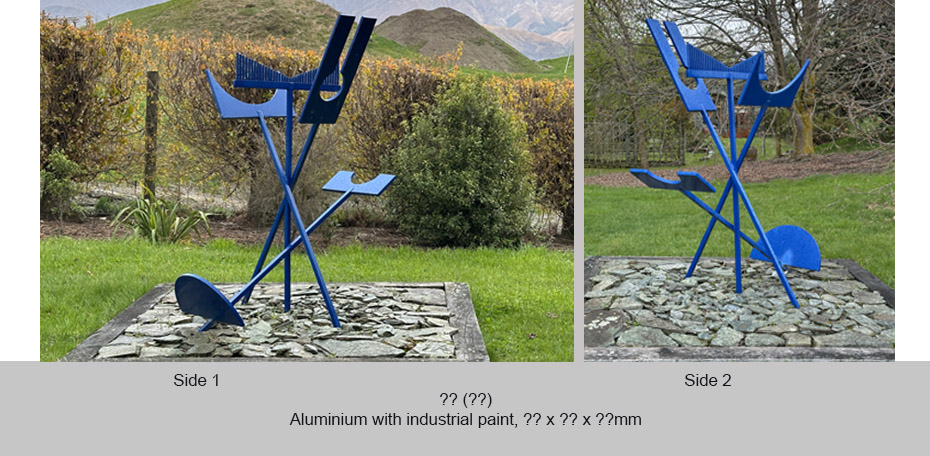
Determining how a sculpture will fill space is addressed in Jones’ process. Making tabletop maquettes, gluing them together then sanding and painting them, allows Jones to achieve this haptically, by sense of touch as much as sight. He can calibrate and calculate using his hands and fingers, then work through sequences of tactile shapes, employing a few self-imposed restrictions or rules to develop multiple variations on a theme. His aim is to choose from the best of the sequences and then construct sculptures which are resolved in form and made of one material with a hard finish. Coreten steel that weathers, or an opaque skin of paint in a single colour, serve to unify and bind the whole construction. All parts are equal. Each sculpture rests on the ground, becoming its own pedestal.