
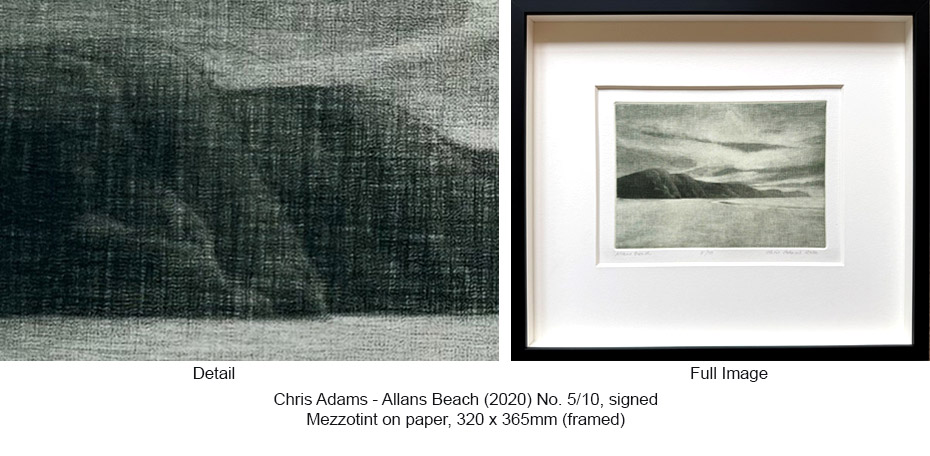
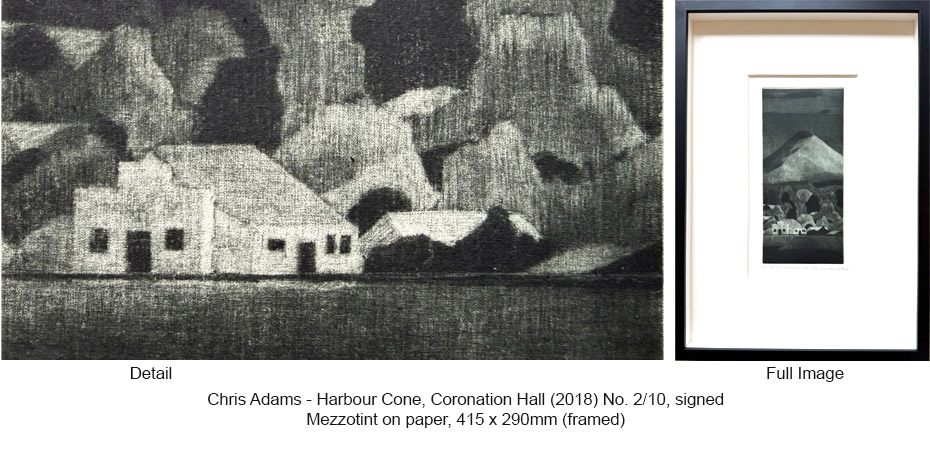
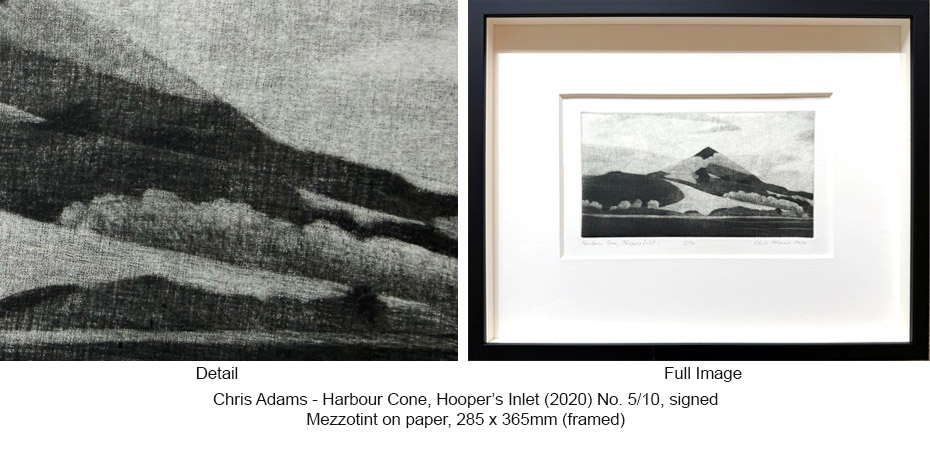
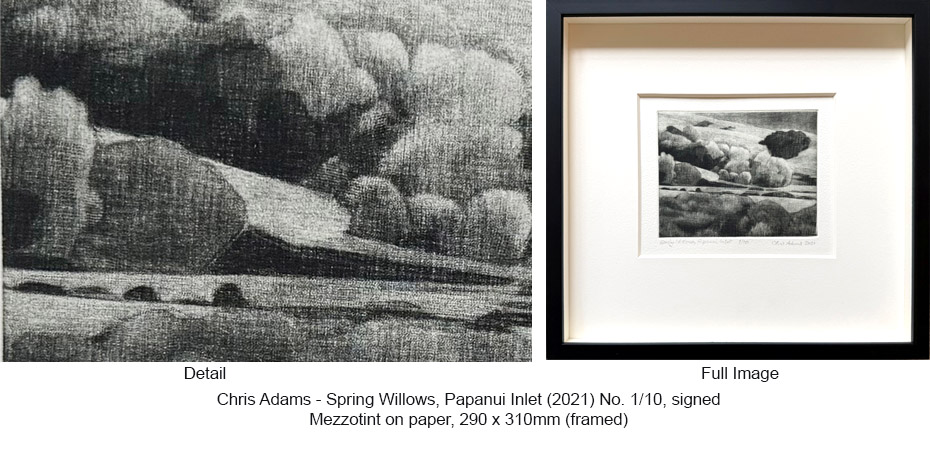
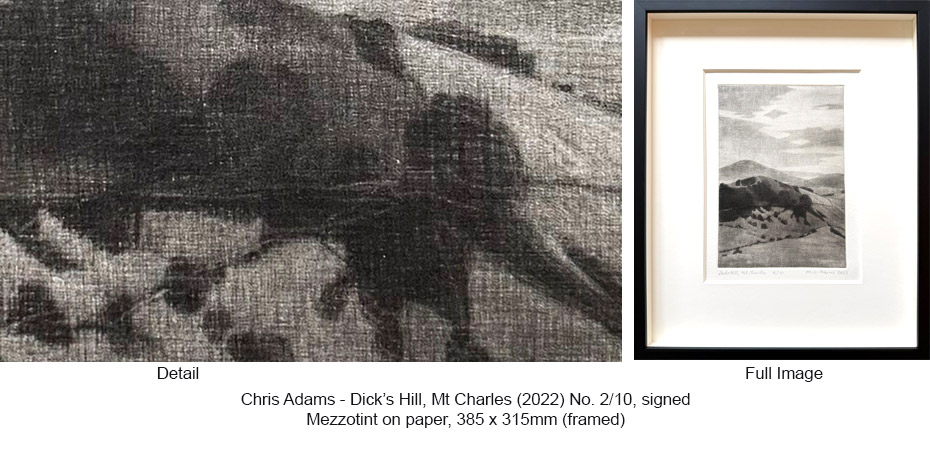
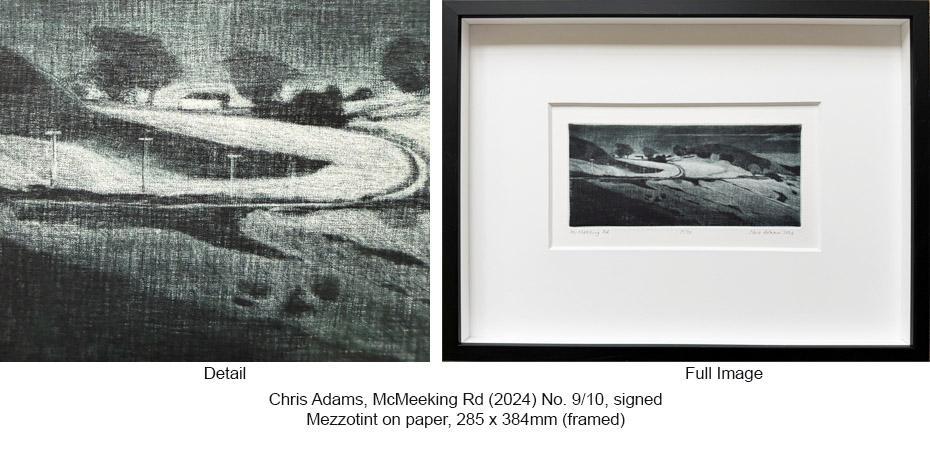
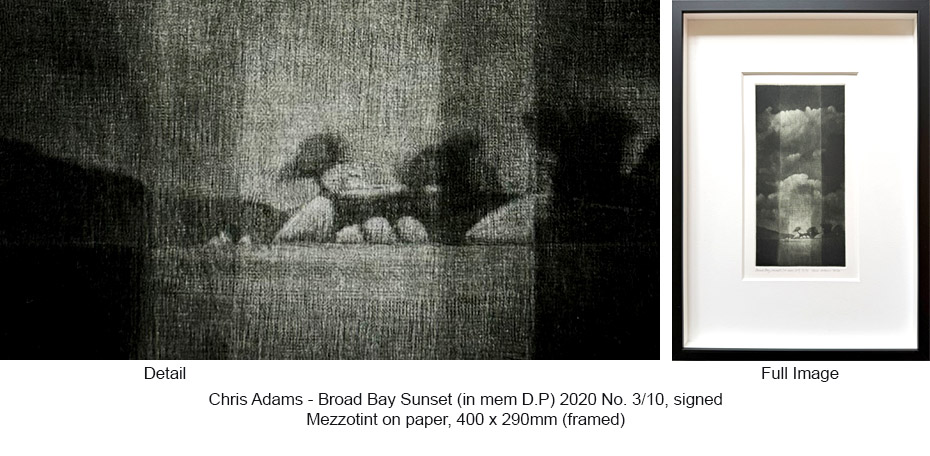
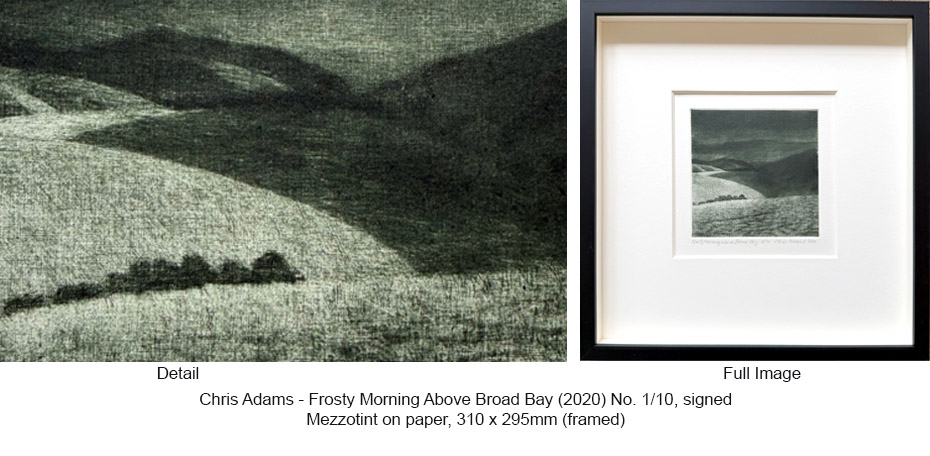
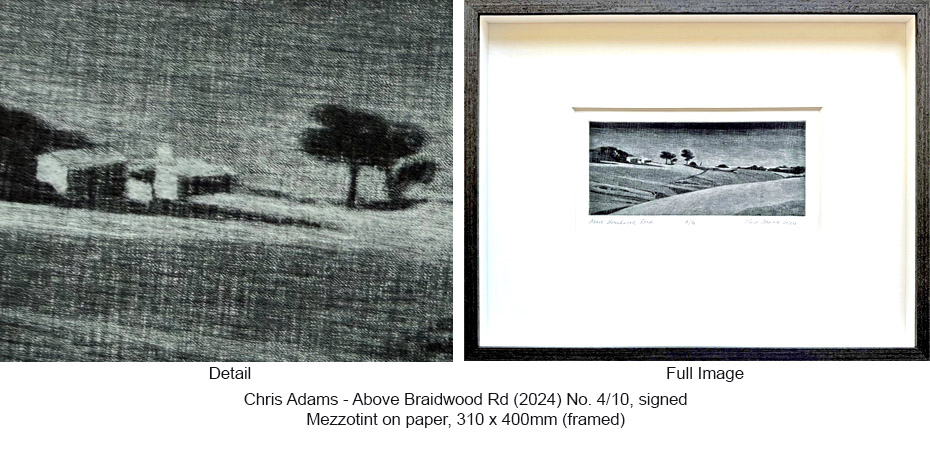
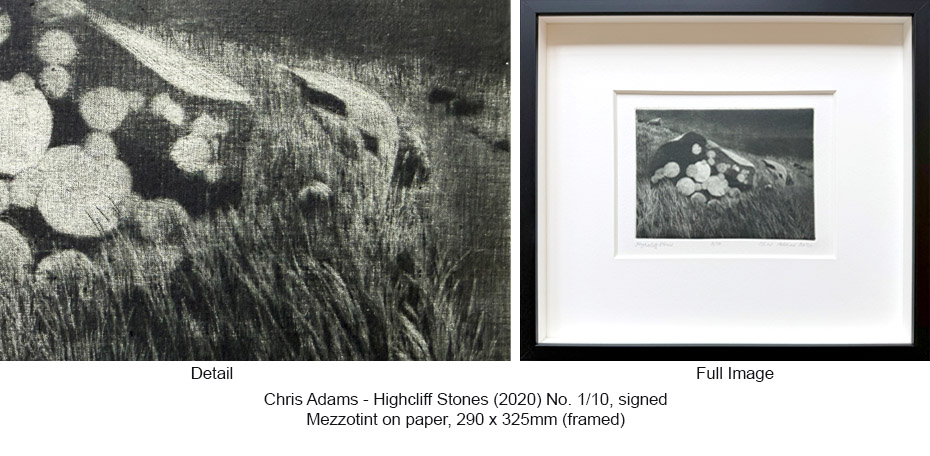
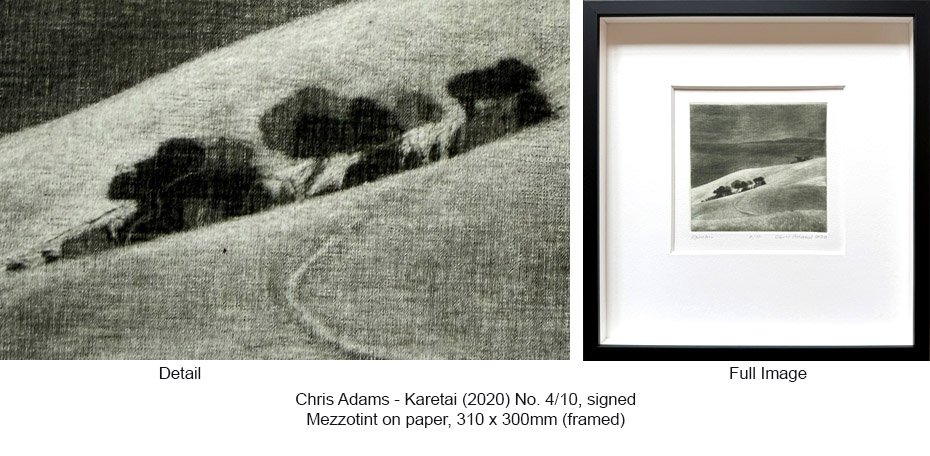
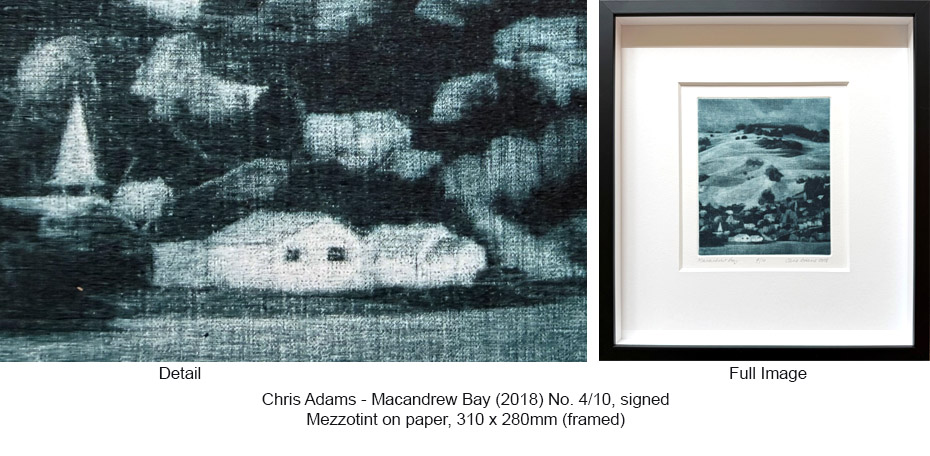
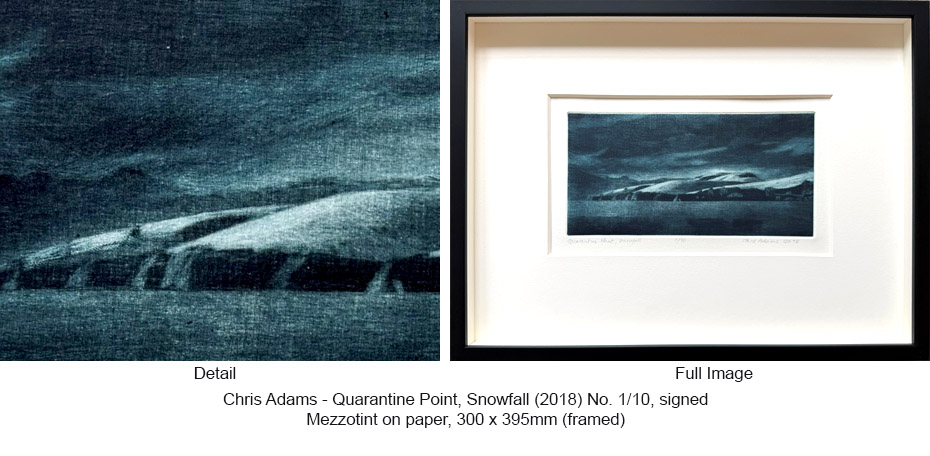
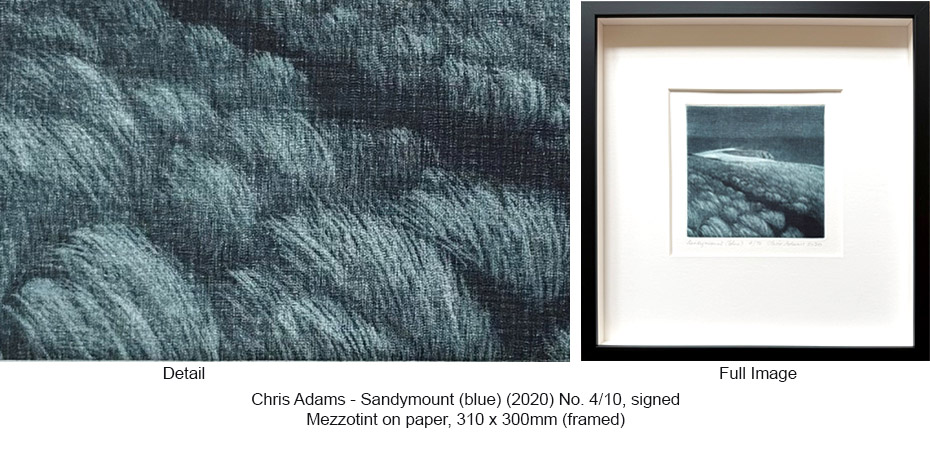
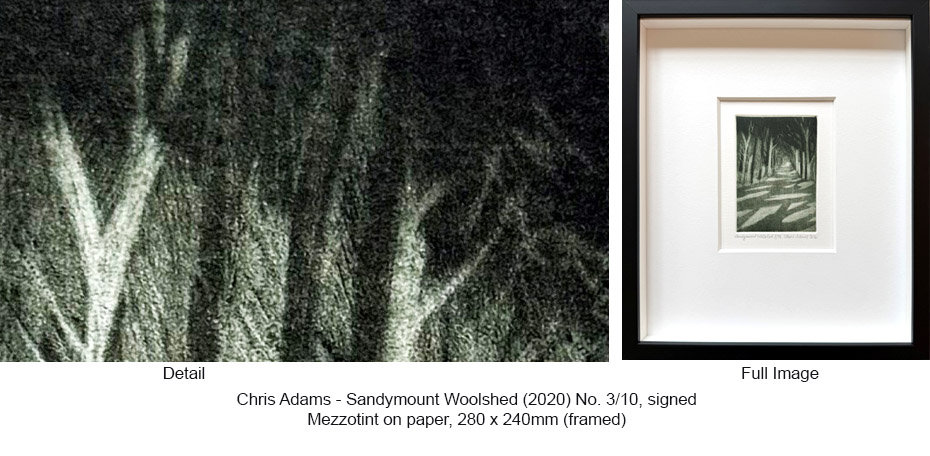
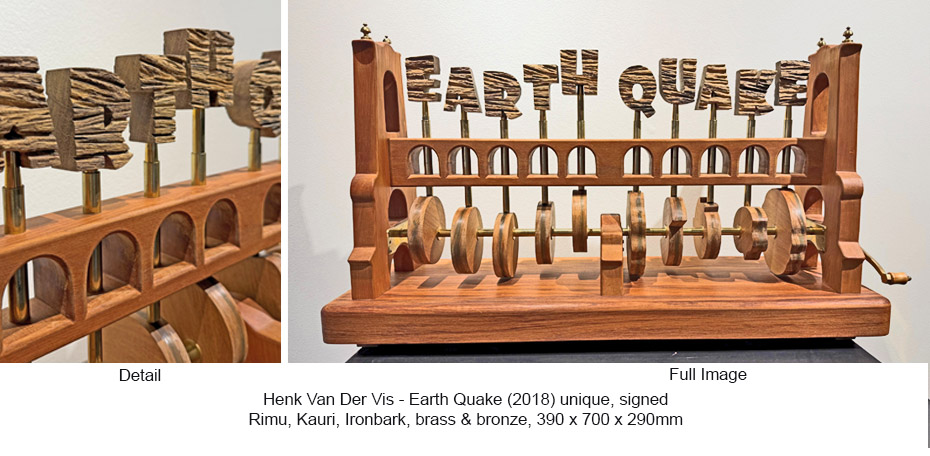
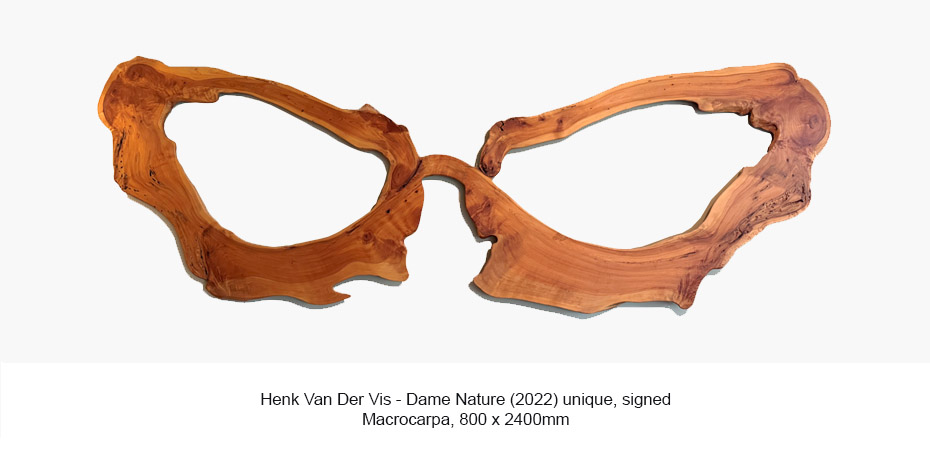
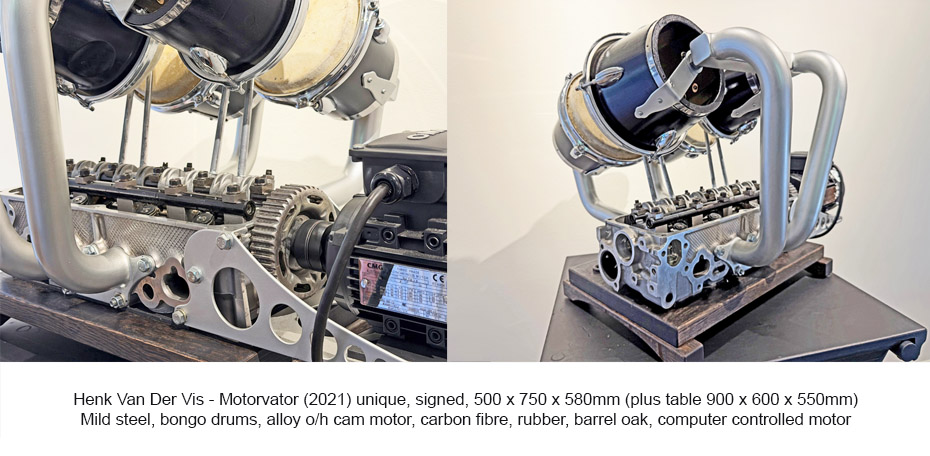
On the Peninsula features mezzotints by Chris Adams (1942-2025) from his Otago Peninsula series (2018-2024) accompanied by kinetic sculptures created by local artist, Henk Van Der Vis.
Chris Adams (1942 – 2025)
Born in England in 1942, and with a PhD in Geochronology (Oxford University), Chris Adams moved to Wellington in 1969 to take a position at the DSIR’s Institute of Nuclear Sciences. With regular visits to Dunedin, he developed a deep fondness for the Otago Peninsula, purchasing a plot of land in Portobello in 1984. In 2008, he built the home where he lived until his death in late 2025.
As a geochronologist, Adams made many trips to Antarctica, the Chatham and the Subantarctic Islands. During these trips he would draw and take photographs of the landscapes he loved. Introduced to printmaking in 1987 by Jill MacIntosh, Kate Coolahan and Basia Smolnicki, it was meeting John Drawbridge in 1994 that led to Adams’ fascination with the mezzotint process. For the next three decades, he turned the photographs and drawings from his travels into mezzotints. His series from the Subantarctic Islands (2008), the Chatham Islands (2010) and Wellington (2014) were included in his previous exhibition, Travels in Zealandia (2025). It was a love of the Otago Peninsula that led to his most recent series, completed 2018-2024. These works are the subject of this exhibition.
Henk Van Der Vis
Born in 1957 in Balclutha, to Dutch immigrant parents, Henk Van Der Vis is a self-taught artist. With a lifelong interest in music and an early career in car racing, he learned that if he wanted something, he had to either fix/modify or build it. An avid reader, over the years he taught himself many skills, including welding, woodwork and metalwork. After later training as a relationship counsellor, he looked to pursue what had been a life-long interest in sculpture.
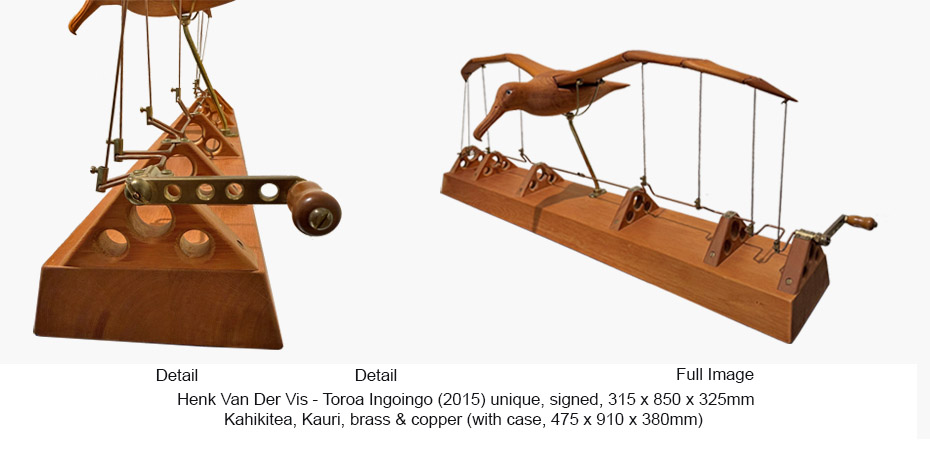
A long-term resident of Port Chalmers, Van Der Vis’ fascination with the Royal Albatross that he regularly watched effortlessly circling around Taiaroa Head, led to his first kinetic work completed in 2015. After extensive research and utilising his learned engineering skills, he combined the native timbers that he loves with copper and brass to create a Toroa that is anatomically correct and closely simulates its movement in flight.
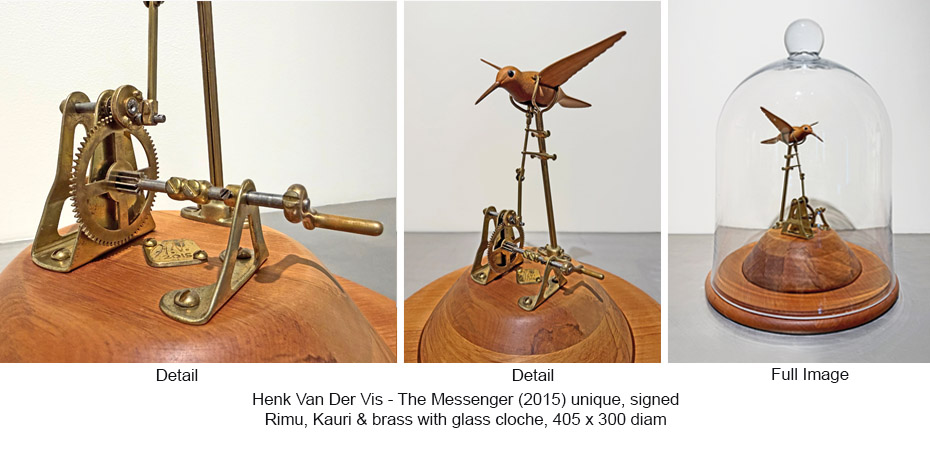
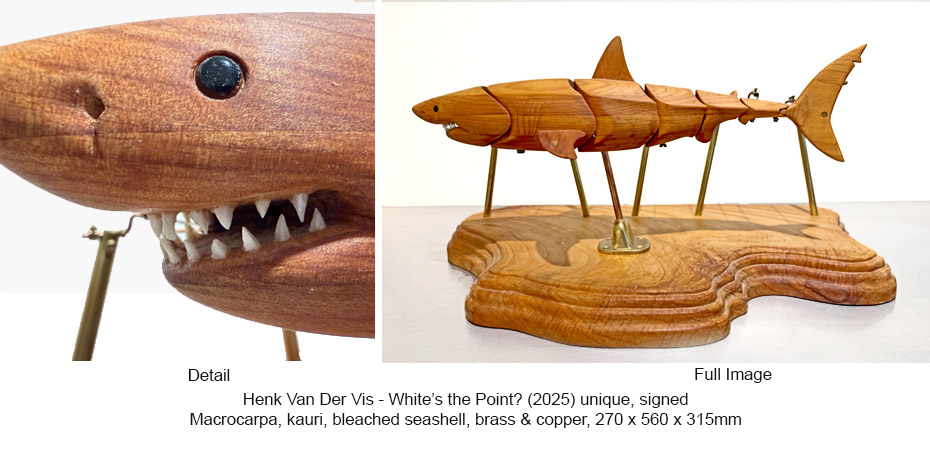
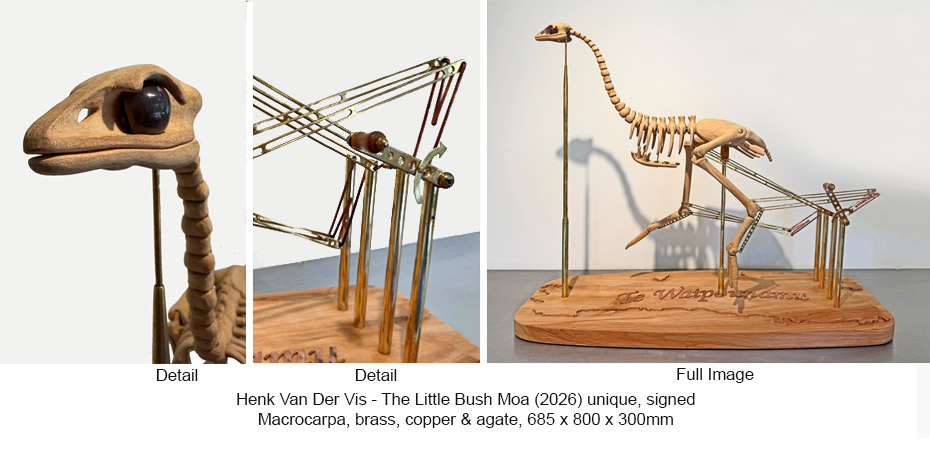
Over the next 10 years, as time permitted, Van Der Vis completed 5 more kinetic works, all of which are included in this exhibition. In creating each of these, he maintained the same primary objective – to combine anatomical realism with mechanical movement that accurately reflects the subject of the work. Each idea for a new work introduced new challenges, and required further extensive research and much trial and error. Materials selected for each component part had to be suited to the purpose – it had to be sympathetic to the subject matter, robust and also beautiful. The resulting works are comprised of handmade components, many of which have measurements with tolerances as low as 0.5mm.